Words In: Kiss Me, Judas by Will Christopher Baer

A twisted and dark tale of a world filled with demented, dangerous people. The style of the writing matches the fractured and fragmented nature of the mind of the main character, Phineas Poe, an ex-cop recovering from a mental breakdown following his wife’s death (Suicide? Murder? Accident? Even Poe’s own memory of this is uncertain). 


This is ne of the strongest and most promising debut novels I can remember Interesting weird characters in a convincingly insane milieu, and truly fantastic writing. I’m impressed, and can’t wait to read the rest of Baer’s work.


Words In: Hiding Man: A Biography of Donald Barthelme by Tracy Daugherty

An enjoyable, informative and interesting literary biography about a writer who was among my favorites in college. Barthelme’s work is always challenging, undeniably “serious” literature, yet it’s almost always fun and entertaining to read. Here the biographer gives us what feels like a complete and honest portrait of a man who was brilliant yet self-defeating, and both selfish and generous. Having read this, I feel less sure I would have liked Donald Barthelme personally had I met him, yet my respect for his work and its impact on the development of American literature are only strengthened.

Because Barthelme’s life and career were cut short (it shouldn’t be a “spoiler” to anyone interested in this book if I say he died of cancer in his fifties) this biography dwells mostly on his formative years and the build-up in his career to where he began to have some success and recognition. Many biographies of artists provide a lot of background about parents and the subject’s environment as a child without this information having much relevance to what the artist eventually became. In this case, though, Daugherty gives us information about the home Barthelme grew up in, and the aesthetic philosophies and architectural work of his father, which help clarify where Donald Barthelme the developing writer came up with his daring, modernist approach.

This book is overall quite successful in what it tries to accomplish. This is essential reading for any serious fan of Barthelme or even modernist American literature, and if you’re interested in American fiction from after mid-century, you’ll probably find much to enjoy here as well. Rated 4 out of 5 stars.

Words In: Why We Make Mistakes (etc.) by Joseph T. Hallinan

Mildly interesting, at times insightful, yet mostly shallow, anecdotal, and lacking any major revelations. Much of what is presented here is basically common knowledge among people interested in human psychology and behavior. For example, much is made of such matters as people being unreliable eyewitnesses, the majority of people being overconfident about their knowledge and capabilities, and the way that our own misapprehension of our aptitudes and weaknesses interfere with our ability to improve.

If you’ve found your way to this along the trail of more interesting, surprising and entertaining books on human knowledge and behavior as Outliers or Freakonomics.

If you approach this as a sort of “human psych 101” you may enjoy this more than I did, but there are better books than this on the same and related subjects.

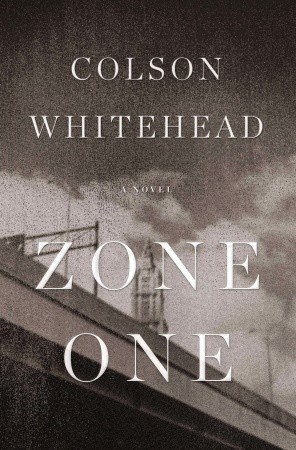
Words In: Zone One by Colson Whitehead

This book came to my attention with Glen Duncan’s review in the New York Times, which opens with the line, “A literary novelist writing a genre novel is like an intellectual dating a porn star.” Duncan himself was a literary novelist who wrote the (wonderful, five stars, loved it) genre novel The Last Werewolf so I figure he’s being a little cute here. Various genre writers and editors and readers were irritated by Duncan’s remark, which didn’t surprise me much. Science fiction, fantasy and horror writers, editors and readers tend to be easily irritated when it comes to comments on the level of respect genre fiction deserves.

My take-away from the review was that Glen Duncan came from the literary mainstream and wrote a fantastic werewolf novel, and the fancy-pants NYT book review hired him to write about another mainstreamish writer who wrote a zombie novel. And lots of genre people are talking all about Zone One, just like they talked all about The Last Werewolf. So maybe Zone One is just as good?

No, not really. Where The Last Werewolf is as entertaining as it is literate, Zone One is more solemn and introspective. In fact, I had to give up my “This is gonna be like Last Werewolf but with zombies, yeah?” preconception before I was able to see what Zone One really is. It’s much less about story and even less about character, and almost entirely concerned with lamenting a lost way of life. At its most cheerful, the book is melancholy nostalgia, and more often it dwells in a sort of numbed, cheerless enervation.

The main character (the amusingly nicknamed Mark Spitz, whose real name is never given) keeps moving, trying to survive. Sort of. I like the narrative voice, but kept hoping for the guy to kick it into gear, to encounter either some truth or some transforming circumstance, or meet some compelling human counterpart to move him. I wanted him to care about what’s ahead of him more, and not just obsess over what he’s left behind him. He seems much more caught up in his thoughts, in a free-associative expository swirl unstuck from time.

The prose here is strong, at times even extremely impressive. I wonder, though, if readers who picked up this book wanting a well-written zombie tale aren’t going to mostly going away disappointed at the slowness and even occasional stagnation of the plot. Colson Whitehead crafts a nice sentence, and comes up with some intellectually compelling images and connections, yet having read this I don’t quite feel driven to explore his other work. In fact if the writing weren’t so technically proficient I’d grade this only three stars rather than four. This one’s not so much about what happens as it is about a character’s look back, and inward.

Words In: Welcome to Hell by Tom Piccirilli

This book (full title Welcome to Hell – A Working Guide for the Beginning Writer) is a quick, easy-to-read overview of (as should be obvious from the subtitle) all kinds of things the new, aspiring writer ought to do. It covers a wide diversity of aspects of the process of moving forward as a writer, from the importance of reading as “food” for the budding writing, to the necessity of self-editing. There’s a section on elements of writing technique such as narrative voice and conflict, and some mention of things peripherally related to writing, such as networking online and rubbing elbows at conventions.

The tone of the book is casual and conversational, but there’s no nonsense, and no shying away from the central truth that for a writer to move even the first step past “beginner” status requires a thick skin, tons of hard work and inexhaustible persistence. Piccirilli himself is a writer of horror and thriller fiction, and most of the points he makes are backed up by examples from genre fiction, but the lessons here are applicable to any writer of fiction, genre or mainstream, short stories or novels.

I know I’m not the only fiction writer who compulsively picks up just about any book about our favorite subject, but I should point out this book really is geared specifically toward beginners. Even a writer slightly advanced beyond that (say, skilled enough to have been published at least once, even if they’re still struggling to get published regularly) may find much of this advice already second nature. For what it’s intended to be, which is a primer for the writer truly just getting started, it’s full of good advice in an easy-to-digest form. In fact, it’s a very quick read, just over 50 printed pages with fairly big type. You could easily re-read the book several times until it all sinks in.

Words In: Saffron and Brimstone by Elizabeth Hand

I first read the lead-off story in this collection, “Cleopatra Brimstone,” in the anthology Poe’s Children (edited by Peter Straub). This story of a young entomologist who moves to London in the aftermath of rape was the best thing in Straub’s anthology and turns out to be the best thing in Saffron and Brimstone too. That’s not at all to say the rest of this collection is lacking.

The very best fictional narrative has the feel of true personal history, enough to inspire the reader to check the writer’s bio and figure out whether or not certain events from the story really happened. That’s how most of these stories felt to me, like places I have seen, and like true life events a storyteller has conveyed to me half-reluctantly and with some sadness. Every story overflows with lush imagery and vivid details. The stories may not be connected by character or events, but a kind of quiet melancholy hangs over them.

It’s always interesting to see a writer shift focus in terms of genre and subject matter. Here, as in her novel Generation Loss, Hand generally tones down the fantastical elements more common in her earlier work. The stories feel exotic, even when nothing impossible or otherworldly is happening. Perhaps her greatest strength is the ability to convey a lifelike sense of place, and of events which might have truly happened. Though in my own reading I tend to enjoy the otherworldly and fantastic, I’m hesitant to say I wish Elizabeth Hand would write more in that direction. Whatever the degree of fantasticality in these stories, Hand’s use of language is so elegant and her characters and situations so engaging, I’ll gladly read whatever she chooses to write regardless of genre considerations. Here, as in Generation Loss, she does something that feels very real.

Highly recommended for those readers who enjoy lush prose and human-focused stories with an otherworldly feel even if they take place in our own world. Readers with a preference for more overt genre elements, as well as those wishing for a greater focus on plot rather than character, may enjoy this less than I did. As for me, this book on top of Generation Loss are enough for me to elevate Elizabeth Hand to among the top handful of authors whose work I’ll explore with most eagerness. From here, it’s on to Waking the Moon or Winterlong.

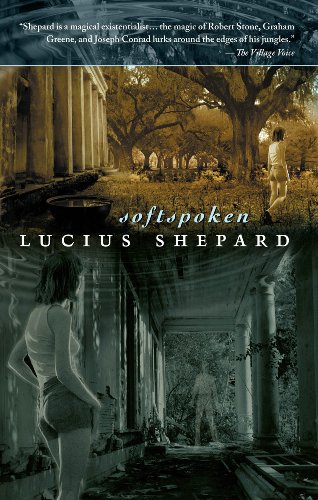
Words In: Softspoken by Lucius Shepard

Sanie Bullard has accompanied her husband Jackson back to his rural home town in South Carolina, where Jackson wants to be left alone to study for the bar. Sanie is on her own more than she’d like, and this forces her to confront just how lacking her marriage is. Jackson’s ancestral home, occupied by his crazy brother and sister, seems to be haunted by some kind of quiet, whispering spirit. Sanie keeps herself occupied by hanging around down at the country store half a mile down the road, and finds herself drawn by the flirtations of a local mechanic. The story feels like it’s less about the haunting and its affect on the Bullard clan over the generations, and more about Sanie feeling stuck in a bad marriage, trying to work up the courage or energy to do something about it.

Shepard writes beautiful, lush and detailed descriptions of the world of the story. He also does a great job getting into the head of the main character as well as drawing convincing portraits of the characters around her. The Southern Gothic quality is well done. I rate this book an extra star just for these things, matters of the writer’s craft.

On the other hand, I found the story too static, lacking even the amount of progression you’d normally find in a short story.

If you’re more interested in expressive writing than plot, and don’t mind a story that ends not too far from where it began, you may really love this. My own judgment is that I found a lot to like about the writing itself but found the story somewhat slight. I’ll gladly investigate Shepard’s other work, but the only recommendation I can give this book is conditional. Some readers will enjoy the stillness, others will be irritated at the “stuck” characters and situations.

Blood and Other Cravings, Edited by Ellen Datlow

There are all kinds of reasons I might read a short fiction anthology. Maybe it’s the only place to find new work by some of my favorite writers. Some anthologies serve to introduce readers to unfamiliar writers, either total unknowns, or familiar names I’ve somehow not yet gotten around to reading. Many readers are motivated by an anthology’s theme — “Oh, I love zombies, and here’s another zombie anthology so of course I’ll buy it” — but I usually don’t. I didn’t buy this because it had to do with vampirism. In fact, I imagine any reader who purchased this hoping for a bunch of straightforward vampire stories would be disappointed. There’s not so much “blood” here as there are “other cravings.”

I’ve given some consideration to the overall shape of multi-author anthologies, a subject which interests me to the extent it’s similar to the way I’ve put together various-artists CD collections in the past. Generally it seems editors load the best stories end up at the beginning and the end, and this is no exception. Among the middle stories, the only one I found noteworthy was Melanie Tem’s very odd “Keeping Corky,” about an enigmatic female character, notable for her mental abnormalities including both strengths and deficiencies, misses the child she was forced to give up for adoption.

Of the early stories, Kaaron Warren’s lead-off “All You Can Do is Breathe” is wonderfully creepy and understated. Elizabeth Bear’s “Needles” is not so much a story as a well-drawn and entertaining “day in the (undead) life,” vividly written but maybe in need of fleshing-out. And Reggie Oliver’s amusing yet dark story of a theatrical hotel overrun by very small tenants convinced me to check out more of this writer’s work.

The best of this collection comes later. “First Breath” by a new-ish writer, Nicole J. LeBoeuf, is an interesting exploration of a sort of transference of life through breath. And I always love Kathe Koja and Carol Emshwiller, whose contributions here (Emshwiller’s is one of only two reprints) are good.

The final four stories alone justify the price of the anthology.

Michael Cisco’s “Bread and Water” tells of a captive vampire trying to cope with his appetites, as well as an incapacity to consume what he desires. The creature’s gradual transformation, told in Cisco’s uniquely intense prose, evokes in the reader an effect like delirium. More than anything else in the book, “Bread and Water” inspired me to seek out more by this writer. That’s not to say it was the best story overall, but the best by an author I’ve previously overlooked.

Margo Lanagan’s “The Mulberry Boys” is told like a fable or second-world fantasy more than a horror story, but what’s actually happening here has quite a nasty edge. Through some bizarre process of surgery and altered diet, humans or human-like creatures are transformed into passive silk factories. I love the way this story is told. Very effective.

“The Third Always Beside You” by John Langan reminds me a little of Peter Straub’s recent novel A Dark Matter in its exploration of a male character trying to piece together disturbing past events. Here a brother and sister discuss their long-held perception that their father might have been unfaithful to their mother, and whether any truth might lie behind this. The fantastic elements along the way are of the subtle “thought I heard a sound, and looked, but nobody was there” variety, yet the story conveys a mysterious and even dreadful sense of secrecy. I own two of Langan’s books which I haven’t read yet, but this story convinced me to nudge these upward in my “must read soon” list.

The last contribution is by Laird Barron, recently the most consistently excellent writer of horror and dark fantasy novellas and novelettes. “The Siphon” includes elements which may seem familiar to readers of Barron’s earlier stories, but this comes across not as repetition, but a fleshing-out of a fictional world which increasingly cross-connects between one story and another. None of the characters, so far as I can determine, appear in prior Barron tales, yet the template of bored, wealthy decadents tantalized by forbidden or occult knowledge is reminiscent of such stories as “Strappado” and “The Forest.” Such is Barron’s skill that even when he’s not trying something entirely new for him (as I believe he did in “The Men From Porlock” and “Blackwood’s Baby” which appear in other recent anthologies), the work nonetheless functions at such a high level as to stand clearly apart.

By the end of a relatively mixed collection, it’s tempting to think mostly of the more satisfying later stories, but the quality dropped off enough in places that I’d give the collection four rather than five stars. At the same time, I’d recommend the book as worthy of purchase for the better stories at the beginning and especially the end.

Check Out Weird Fiction Review’s New Ligotti Interview

Another day, another interview link. Well, this is more than that — also a heads-up about a great new and interesting web site created by Ann and Jeff VanderMeer: Weird Fiction Review. It’s great to see this sub-genre given such a clean and professional presentation. The site seems to have been created as a launching point for the VanderMeers’ massive upcoming anthology, The Weird, yet most of the content is only indirectly related to that volume.

There’s a lot to see here, but what inspires me to point people in that direction today is a fascinating new

William Gibson’s “Art of Fiction” Interview From Paris Review Is Now Online

I like William Gibson and consider him more interesting than most writers. I like his work, and I’m interested in how he’s transcended genre to become a nearly mainstream celebrity as exemplified by his appearance in a place like Paris Review. He’s a weird, smart, thoughtful guy.

This interview is worth a read if you’re a fan of Gibson, or if you’re a writer in any genre interested in writing process, or if you’re a reader curious about the point where futurism and science fiction intersect with a literary perspective. It covers a lot of ground, and reminds me that of the 20th and now 21st century’s best interviews of fiction writers, most are part of the Paris Reviews “The Art of Fiction” series.

http://www.theparisreview.org/interviews/6089/the-art-of-fiction-no-211-william-gibson