NecronomiCon Providence Preliminary Report

The NecronomiCon Providence event was incredible, wonderful beyond all expectation.

I met an amazing roster of weird/horror talent, interacted with great writers, editors, publishers, critics and artists. Below, I’m showing off for Richard Gavin, Scott Nicolay, John Langan and his mentor Bob Waugh, Jack Haringa, Michael Cisco, Selena Chambers and Simon Stranzas.

redpants

I attended a reading by two of my very favorite writers, Laird Barron and Joseph S. Pulver Sr., and was surprised to be asked to step up and read some of my work for the crowd that had gathered to hear the big boys read.

I experienced a live performance by Lustmord, one of the giants of dark ambient music, and a primary influence on my own efforts as founder of Hypnos Recordings, and as a recording artist.

I bounced off any number of inspiring people, sights and sounds, so much humor and fun and inspiration, it was like the best and craziest 4 days of college distilled into one long weekend.

I was able to drag my lovely wife Lena along, and bask in her giddy enjoyment of the same pleasures.

At the end, I was swept up into the kind of mind-blowing all-star room party you see people bragging about in con reports, and you think, “Oh shit, I missed THAT!” Laird Barron and John Langan’s room, filled with all manner of madness. Barron’s Big Chair, Langan and Nicolay’s Cuddle Corner, and even Jerad Walters of Centipede Press, perhaps the finest creator of dark genre books we’ve got. Mix in an appalling abundance of very good Scotch whisky, and ohhhh golly!

cisco

I intend to write about this in greater detail, and offer more pictures, once the world stops spinning so fast.

Reading Between Greats

This morning Lena and I attended an early reading by Joe Pulver and Laird Barron, two of my favorite writers. Joe had hinted yesterday that he had a “surprise” planned, so Scott Nicolay and I definitely couldn’t miss it.

After Joe read his story, a “Mountains of Madness” tribute bound for an upcoming S.T. Joshi anthology, he revealed the surprise. He and Laird had arranged in advance to leave a gap of time so Scott and I could both read briefly in between them. Joe handed me his copy of The Grimscribe’s Puppets, and I went first.

After a brief, fumbling intro (I figured this was necessary because most of the audience had no idea who I am), I read about the first third of “Diamond Dust.” It seemed to go very well, and people applauded, and many said nice things afterward.

I’ll have more to say about it later, but that was a major highlight for me so far. I really owe major thanks to Joe and Laird for giving me and Scott this boost.

Words In: At Fear’s Altar by Richard Gavin

I kept reflecting, as I read Richard Gavin’s fourth collection At Fear’s Altar, about what horror fiction ought to be. Horror stories should be dark, disquieting. Too often what passes for “horror” is mundane or predictable. Whereas familiarity can be a virtue in some genres, where readers seek the recurring comfort of touchstones, horror by its very nature should unsettle.

Richard Gavin’s work stands out as chillingly dark, wickedly strange and otherworldly. These stories have the heart-pounding feel of nightmare, and carry a strong suggestion of the numinous. Where other writers offer familiar monsters in comfortable territory, always stopping short of threatening the reader, Gavin explores the weird and surreal just as much as the horrific. His strength is conveying an otherness, something looming out there, threatening. There’s a commonality with the cosmic horror of Lovecraft, but I find a greater kinship to the spooky occultism of Machen and Blackwood, whose best stories have at their heart a sense of something unknowable happening just out of view, completely out of proportion with human experience, and vibrating on an entirely different wavelength.

atfearsaltar

Highlights include “Chapel in the Reeds,” in which an elderly man moves back home with his daughter, who doesn’t want him there. The man wanders the countryside, seeming to shift into different realms, seeking a strange, mystic chapel, and speaking with his late wife. His young granddaughters are frightened when they witness his strange behavior, standing in the middle of a field, talking to no one. His daughter thinks he’s disintegrating, while he remains focused on finding the chapel again. Whether his reality or his daughter’s is most true, either possibility is disturbing.

In “The Abject,” Petra watches an eclipse, along with her husband tad and two male friends. Out across the water is a jagged island know as The Abject, about which Petra’s friend recounts a legend. Petra has a vision of proto-humans on the spire, and feels dangerously drawn to go there herself.

The main character in “A Pallid Devil, Bearing Cypress” walks the streets among falling bombs in a time of war in Europe. He’s trying to see the devil, feeling sensitively attuned to the city’s shadow side, and thinks he sees something. He finds a broken Cypress flower, red and star shaped, the spots a devilish, horned creature. Excited and inspired, thinking he’s found the devil he seeks, he then hears the cries of a girl trapped under rubble, and leaves her, trying to chase the devil. After he loses track, he to Helma and helps her out from under the rock. They connect, end up marrying, though not too happily. He’s still preoccupied with seeking darkness. They move out to the country, and nights he roams near their new house, looking for the devil’s traces. At times he finds these scattered Cypress flowers, but never quite what he seeks. Finally he learns Helma too is seeking something.

“King Him” is a shocking story of domestic unease, an adult brother and sister living together. She thinks he’s the crazy one, insisting on talking about an entity called “King Him.” Maybe he’s insane, maybe they both are, or maybe King Him is the real cause of the dysfunction creeping into their relationship.

“Only Enuma Elish” is a good example of Gavin’s treatment of characters with supernatural or occult beliefs. This story’s narrator meets an older woman across the street, and she introduces him to the book “Enuma Elish,” a tale of the universe’s creation, from ancient Babylon.

In “Darksome Leaves,” an isolated, socially awkward man becomes attracted to a young woman in his apartment building. His hopes of getting closer to her shift when they discover an ominous mask.

By far the book’s longest and most ambitious story, “The Eldritch Faith,” is both philosophical and metaphysical in its focus. It follows a boy who grows up seeking to understand reality’s true nature, to find a way out of the depressingly mundane ordinary existence. He comes up with a game called Curtains which he believes allows a ghost or spirit to communicate with him, and possibly enter our world. This exploration unfolds gradually, and feels chillingly real. His interactions with the entity he comes to know as Capricorn are among the more creepy and unnerving things I’ve ever read. “The Eldritch Faith,” which concludes the collection, exemplifies what Gavin is capable of.

At Fear’s Altar achieves heights — or perhaps depths — of darkness and disquiet almost unrivaled in recent horror fiction. It’s among the few most notable and impressive story collections I’ve read in the past five years. With this book, Gavin rises in my estimation to rank among the strongest practitioners of horror and weird fiction currently active. At Fear’s Altar is my first exposure to Gavin’s fiction, but now I gladly anticipate the pleasure of going back to investigate Charnel Wine (2004), Omens (2007), and The Darkly Splendid Realm (2009).Even more, I eagerly anticipate Gavin’s future works.

Novel Construction Kit

I haven’t had a chance to work on the novel-in-planning in a couple weeks (trying to finish up a short story for deadline), but wanted to document my process as it evolves.

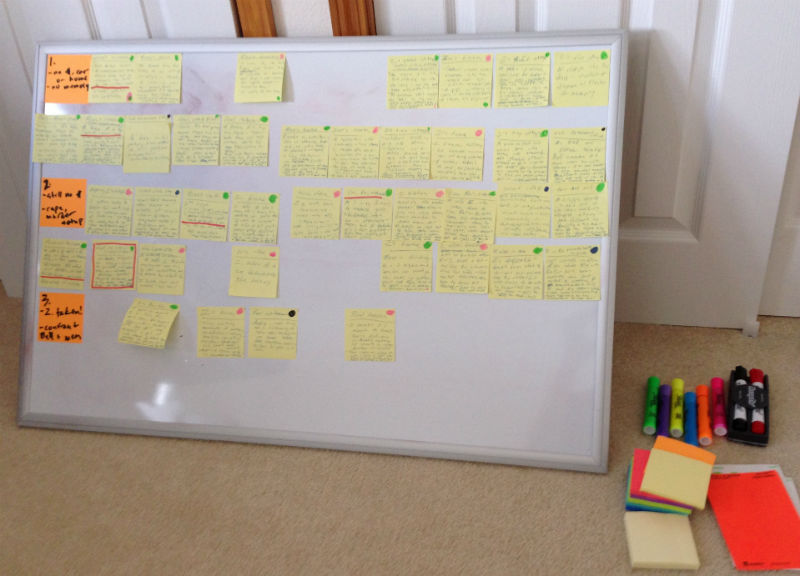
Here’s my old-fashioned “pens and paper and post-its” setup for planning my novel. Three sections, basically three acts, with fifteen or twenty scenes each. I’m not sure how I’ll work the chapter breaks at this point.

novelplanning

Eventually I’ll get more into color coding different kinds of scenes. For now I just have a bunch of yellow post-it notes with colored dots in the corner to show at a glance whose POV the scene’s in.

This isn’t completely finished, but close. My intention is to fully outline section one, loosely outline section two (leaving more room for adding or changing things based on “feel”) and leave section three pretty open. I see this as having the best qualities of the outline approach and the seat-of-the-pants approach.

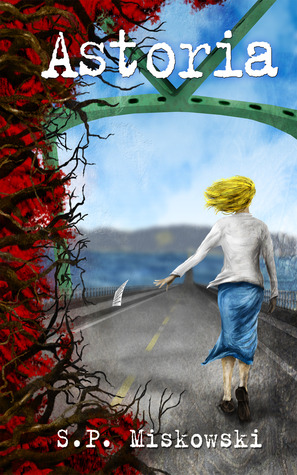
Word In: Astoria by S.P. Miskowski

Astoria is the second in a series of novellas linked to S.P. Miskowski’s Shirley Jackson Award nominated debut, Knock Knock. Each of the linked works follows a different spoke outward from the hub of Knock Knock’s primary characters, a trio of young girls and their immediate families.

One of these is Ethel Sanders, stuck in a life she finds unbearable. She reacts to sudden tragedy by abruptly fleeing Skillute, Washington, the small town she’s lived in all her life. Ethel not only leaves home, but steps out of her whole identity like shed skin. She travels down the Columbia river, which divides Oregon and Washington, toward the small coastal town of Astoria, on the Oregon side. There she tries on aspects of a new life, picking up elements one at a time, fantasizing that all of it’s real. Ethel clings to belief in the possibility of an unhappy middle-aged woman simply leaving behind the mundane existence that caused her dissatisfaction, to truly start over. For a while, it seems she’s reinvented herself, truly run away from the elements in her life that troubled her. But has something come along for the ride? Her escape may not be what it seems.

Astoria Cover

At times, Miskowski’s approach reminds me of Stephen King’s. Many attribute King’s lasting popularity to the horrific story elements, but I’ve always believed what he does best is tell the story from a place so intimately wound up in a character’s perspective that the reader feels as if they’re living someone else’s experience. Miskowski too writes in a style straightforward and transparent, yet vivid and always engaging. A deceptively simple narrative surface hides churning layers of confusion, pain and psychological turmoil.

Just as in Knock Knock Miskowski leads the reader to identify with the primary characters, in Astoria’s we share Ethel’s turmoil, her desperate grasping at a possible alternate future life. Every time she seems to have taken a step closer to this goal of reinvention, she seems to slip deeper into a state of delusion or self-deception. By the end, Ethel’s situation seems at once more settled, almost domestic, and also nightmarish. Astoria is the most accomplished work of fiction yet from S.P. Miskowski, an author still improving, achieving stronger effects. It’s a work of confidence, of engrossing atmosphere and real narrative control, strongly recommended.

The Fundamental Units of Story

For a long time, scientists believed the atom was the fundamental building block of matter, until they realized even the atom could be broken down into something smaller.

My writing improved significantly a couple years ago when I made the conceptual adjustment from the practice of asking of each story, “What is this story trying to say?” to instead looking at each scene separately, and asking, “What is this scene trying to say?”

A story isn’t a unilateral movement, or a single tone. Looking at a story in aggregate, it can be difficult to answer the question “What is this? What am I trying to accomplish with it?” Breaking it into scenes makes this easier, and that change in approach really helped me to write more effective fiction.

Increasingly I believe the fundamental unit of story is not the scene, but a “sub-scene” unit I refer to as the “beat” or “movement.”

When I break my stories down into scenes (working in Scrivener makes this simple), it’s easier to make sense of what each scene is meant to accomplish — where it’s headed, what kind of emotional tenor would work. Even then, a scene might contain two or three separate movements, each with a distinct impetus and effect, or a different tone.

I’d like to write more about this, possibly give examples of how breaking up stories into “beats” or sub-scenes has helped make my writing more effective. Yes, it’s possible to look at smaller blocks of text within a conventional word processor, but it’s harder to view them as distinct units of story, separate from what comes before and after. For me, this is the primary advantage of working in Scrivener.

What They’re Saying About “Arches and Pillars” (TTA Forum)

I really need to set up one of those Google Stalker services. You know, the robot brain that crawls the internet looking for mentions of one’s name or works. I almost missed this informal review of my story “Arches and Pillars.”

It appeared on the forums of TTA Press, publishers of Black Static magazine, as well as Interzone, and their crime-focused effort Crimewave.

The forums are open to the public, and the post is under the reviewer’s actual name Andrew Hook. My thanks to Andrew for the kind words!

What They’re Saying About “Arches and Pillars” (DF Lewis)

Writer and Editor DF Lewis recently posted a “real time review” (in which he posts relatively real-time reaction to a text as he reads it) of the latest Black Static issue.

You can find his reaction to my story “Arches and Pillars” HERE (scroll down a bit).

Lewis’s reviews are more impressionistic than the usual “liked it” or “hated it” reaction. I thought his response was interesting, and worth passing along.

Black Static and Interzone Now on Weightless Books

Weightless Books, one of my favorite sources for electronic books and magazines (including subscriptions), now offers Black Static and Interzone from TTA Press. This is significant because “hard copy” subscriptions to these UK periodicals are expensive for readers in the USA and Canada.

TTA Press page on Weightless Books.

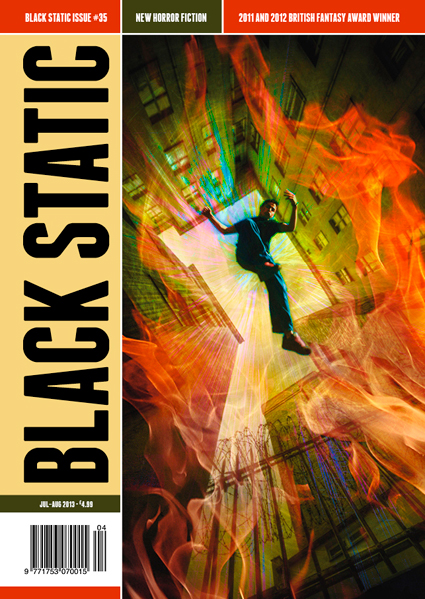
Black Static 35 – $4.99 PDF, including my story “Arches and Pillars.”

blackstatic35

What They’re Saying About “Diamond Dust” (Seattle P.I.)

A very nice review of The Grimscribe’s Puppets appeared online today on the blog of the Seattle Post-Intelligencer.

The reviewer S.P. Miskowski, herself a fiction writer twice nominated for the Shirley Jackson Award, favorably mentioned my story “Diamond Dust.” It’s wonderful to be mentioned in a context like this, as a peer of some of my favorite writers like Livia Llewellyn, Richard Gavin, Scott Nicolay and Michael Kelly. This kind of thing makes an up-and-coming writer feel like he’s starting to get somewhere! Thanks, S.P. Miskowski, for this wonderful boost.

LINK: S.P. Miskowski reviews The Grimscribe’s Puppets.