Really Loving The Door Into Summer

I’m not quite done with The Door Into Summer yet, but really enjoying it. I was just thinking, as I read this, that Robert Heinlein reminded me an awful lot of Tom Clancy, then I stumbled upon a quote in which Clancy expressed admiration for Heinlein. Weird, because they wrote such different stuff, and to me the similarity was really just in the simple, old-fashioned masculine confidence of the characters. Both writers obviously respect hard work and military service and expertise in things like engineering and science and economics.

Anyway, this blog isn’t really meant for formal reviews, more like semi-formal expressions of enthusiasm or disdain, but I still haven’t quite finished the book yet so I’ll wait before writing more.

Just wanted to say this one puts a smile on my face at least once per day, and though it was written before I was born, the small dated aspects don’t bother me at all. Makes me want to read a bunch more Heinlein this summer!

Philip K. Dick on Blade Runner

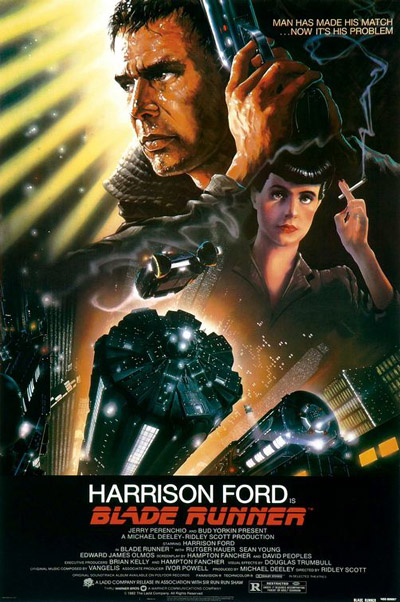
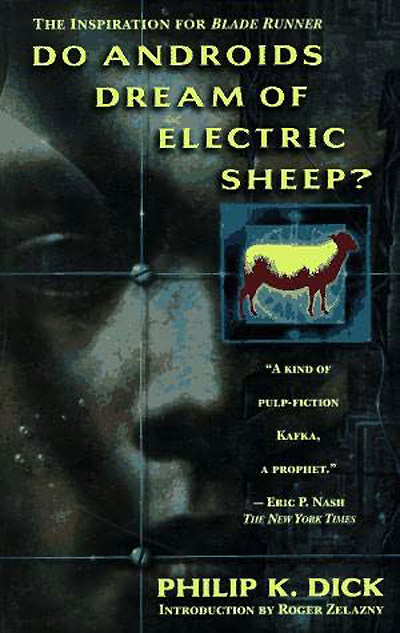
First off, Philip K. Dick didn’t write Blade Runner, but he did write Do Androids Dream of Electric Sheep?, the story on which Ridley Scott’s science fiction masterpiece was based.

Also, Dick never had a chance to see the completed film, but he did apparently have a chance to see a short clip, which was enough to inspire him to write this letter to the Ladd Company (producers of the film) expressing his pride and enthusiasm for Blade Runner.

If you know much about Dick, you know he was very troubled, and it made me feel good to read this letter. It’s too bad he didn’t get a chance to see the entire film, which is one of my favorite films in any genre. Speaking of which, I’m going to create a page on this blog to list some of my favorite books and movies. Lists are fun!

Via Kottke.

Moving on from one classic to another

Earlier this week I blogged about Ringworld by Larry Niven, and if you missed that entry, I didn’t like it much. I actually wrote that blog entry before I was completely finished with the book, and through the last couple days as I worked through the last part I thought, “Maybe I’m just being a sourpuss and holding a certain dated-ness against the book more than I should?”

Then I got to the end and immediately started The Door Into Summer by Robert Heinlein, a book written more than a decade before Ringworld, and the difference was so dramatic, the contrast so stark… it was like spitting out a mouthful of sour milk and cleansing the palate with a few swigs of ice cold root beer. So, so much better. I’m not far enough into this new one to say much about it yet, other than Heinlein knows how to craft a sentence and his dialogue is pretty sharp. This one builds more slowly than I’m used to with Heinlein — he usually busts right in with a spaceship out of control spinning toward the sun, or a bunch of teenagers fighting bugs fifteen feet high.

In other news, if you know me through Hypnos or have tried to email me through hypnos.com you may have wondered what’s up, as our web site and very busy Hypnos Forum and our hypnos.com email addresses are entirely conked-out today. The hosting company that manages the hypnos.com domain is all dealing with some kind of catastrophic server issue and we’ll probably be out of action all day today. If you need to reach me or Lena you know how to find us on Facebook, otherwise leave me a message here.

Peter Straub asks: What about genre?

A quick outside link to an article by Peter Straub, bestselling author of Ghost Story and a couple of collaborations with Stephen King, discussing the matter of genre. If there’s one category of writer even more touchy about genre than science fiction people, it’s probably horror writers.

Straub says…

Just for beginners, let’s admit that literary fiction is a genre, too, shall we? Expectations guide its readers, that of respect for consensus reality and the poignancy of seemingly ordinary lives, of sensitive character-drawing and vivid scene-painting, of the reversals and conflicts characteristic of the several sub-genres of literary fiction.

Link to the full article.

I’ve touched on this subject several times already in a blog that hasn’t yet seen two dozen posts, and that’s because I’ve gone through three periods of writing in my life, each time in a different style. As a teen I wrote horror/supernatural stories influenced by Twilight Zone (both the TV show and the magazine), somewhere halfway between the short fiction of Harlan Ellison and Stephen King. In my twenties I wrote more straightforward stuff meant to be “literary” but couldn’t stop myself from adding strange flourishes that might have been postmodernist or magical realist, or might now be called slipstream or “new weird.” Now I’m writing science fiction, but with a great emphasis on people, relationships, internal thoughts or feelings, as compared to “spaceships, aliens and planets” kind of science fiction.

Having come out the other side of these transformations myself, I realize: The same kinds of ideas and surprises have always interested me, and in a sense I’ve always written about the same things. The settings and the clothing are different, and that’s the biggest thing “genre” really is. How is everything dressed up?

I suspect most writers wish the boundaries of any given genre were more flexible.

SF Academy 02 – Spin by Robert Charles Wilson

Last week I wrote about a very well-known, arguably classic, work of science fiction based on a big idea. In case you didn’t read my last post, SF Academy 01 – Ringworld by Larry Niven, I was disappointed with how that big idea was executed.

Today I’m going to focus on a more recently piece of “big idea” science fiction, one that was wonderfully effective by all measures. I’m talking about Spin, a novel from 2005 by Robert Charles Wilson.

Spin
Spin by Robert Charles Wilson (2005)

In Spin, we observe three young friends, the protagonist Tyler Dupree and his friends, Diane and Jason Lawton, who are brother and sister and whose father is a powerful and wealthy businessman. Soon there is a major event affecting the entire world: the stars disappear, and it is determined that Earth has been sealed off from everything outside by a sort of shield. The sun still appears to rise according to the same schedule, and give warmth and light to the Earth, but it’s not the “real” sun, more of a virtual projection.

Humanity scrambles to figure out what happened, who might have caused this, and there’s an apocalyptic feel as fear and hopelessness take hold. Many aspects of this change are considered, and we see how such a thing might affect religion, business, the focus of scientists, interpersonal relationships. All this wide-angle stuff is seen from the perspective of Tyler, who remains intimately connected to Diane and Jason even as their lives diverge. Eventually humanity gains a better sense of what’s happening and why, and Jason is at the center of these efforts, and this brings Diane and Tyler into closer proximity with the mystery of the “spin.” Tyler has always been infatuated with Diane, and he struggles to find a way to connect with her, and he also has difficulty relating with Jason, who is obsessed with the spin mystery to an unhealthy degree. The matter of the “spin,” what it means, who caused it, and how this unfolds is of course the heart of the novel and I won’t include spoilers here.

What’s interesting and unusual here is the degree to which Wilson keeps this an intimate, human story despite the grand scale of space and time covered by the events in the book. As wide as the scope becomes, everything is always filtered through the perceptions and responses of a small group of people we feel close to, and care about. Tyler himself is not drawn as clearly as Diane and Jason, but we understand Tyler’s feelings for his friends, and it makes the events of the plot more dramatic.

Spin won the Hugo award in 2006 and Wilson has indicated it’s the first book in a trilogy. The sequel, Axis, came out two years later, and it’s not quite as strong as its predecessor. I’ll review that one here soon.

This is a book that delivers on what I consider the ideal of science fiction literature, which is to explore big ideas, convey a sense of wonder, and do so on a human scale so that the story packs emotional impact. Wilson is a mature and sensitive writer, and delivers fantastic events on a massive scale, in a way that feels natural, human and real. It’s very possibly the best science fiction novel of the past decade, and I’d say Wilson is my favorite recent discovery as well.

SF Academy 01 – Ringworld by Larry Niven

I thought about structuring this whole Science Fiction Academy series of posts in some organized way, like laying out the books in chronological order, or in the order I read them, but decided it was more fun to discuss whatever I have the strongest opinion about at the time. And right now, I have a strong opinion about Ringworld, the best-known novel by Larry Niven.

Ringworld Cover

Back in the 1970s, before I had read much science fiction myself (at that time preferring Tolkien and comic books and more Tolkien) I remember seeing a friend reading Ringworld, carrying it with him on the school bus every day for several months. He had such enthusiasm for it, and talked a lot about the cool concept at the book’s center, the Ringworld itself. It’s a giant alien construction far from Earth, encircling its own sun, and with land and gravity and atmosphere very much like a planet. Every edition of the book I’ve ever seen includes a picture of the Ringworld on the cover, which makes sense because the book is about the Ringworld itself much more than it’s about the people or events in the book. If it sounds to you like that might be a problem, that the setting (interesting though this piece of alien construction may be) has precedence in this book over character and plot, you’d be correct. It is a problem.

The book does have a few interesting details aside from the Ringworld itself, weird bits of alien life and technology and lore that apparently appear elsewhere in Niven’s “Known Space” series of stories, of which this novel is part. There’s a fertile inventiveness underlying this novel which make all the more frustrating the problems I’ve hinted at.

Ringworld Alternate Cover

The problems, then. The main character Louis Wu, a 200 year old Earth man who remains physically youthful and vital through futuristic biotech advances, is relatively interesting in concept. As for the sort of identifying traits that make a character, though, I have a hard time of thinking of anything interesting about Louis Wu. He’s sort of a bon vivant, and fancies himself some kind of a lover. I don’t really object to Louis Wu, and if the rest of the characters were as unobjectionable as Louis, this would be a better book.

The book’s premise, stated simply, is that an alien member of a race called the Puppeteers (previously known to Earthlings, but long absent from our planet for unknown reasons) has appeared and introduced himself to Louis, stating that he intends to put together a small team to travel across the galaxy using fancy faster-than-light technology way beyond what the humans possess, to check out some anomaly observed by other Puppeteers who are on a migration across the galaxy (which explains why they suddenly left Earth). This Puppeteer, Nessus, is a strangely-shaped two-headed alien, not the usual Star Trek “human with funny shaped ears or forehead” variety, and supposedly the Puppeteers’ defining trait as a race is their cowardliness. This trait is portrayed without the least subtlety, with a clownish idiocy that reminded me at times of Jar Jar Binks.

Before I get to the remaining characters, this raises my biggest objection to this book, which is the tin ear demonstrated especially by the dialogue, but also the clumsy and awkward writing throughout. Niven writes like a scientist with some neat ideas who decided he could write a novel and had never practiced before or even taken a writing class. I know plenty of readers are more interested in the ideas, especially in science fiction, and if you’re one of those readers, maybe you’re one of those who have made this a “classic” of the genre.

The other characters, then. There’s Teela Brown, a young and beautiful Earth female who is in love with Louis despite barely knowing him, and their 180 year difference in age. Nessus wants to recruit her to the team not due to her skill or experience, but because he believes her to be lucky, asserting that luck is an inheritable genetic trait and that she will be a good luck charm for the group. The way Teela’s dialogue and motivations are written made me wonder if maybe Niven had never actually talked to a real live pretty girl before, and the character felt less real to me than even the aliens.

Ringworld New Cover

The last main character is another alien, a member of a race of catlike warriors called the Kzin whose defining traits seems to be inability to control their tempers. The Kzin and humans have been fighting a series of Man-Kzin wars over the years (more stuff from the other “Known Space” stories, mostly just mentioned as backstory here) and though they fancy themselves fierce warriors, their brashness, impatience and stupidity have doomed them in these previous wars. The Kzin guy in this story is named Speaker-to-Animals and apparently he’s been bred to, well, speak to animals, and be a sort of diplomat rather than a warrior. You’d never know this by his actions, though, as he’s boastful and bullying, cartoonishly prone to violence.

Halo

The concept of the Ringworld itself is intriguing and cool enough to inspire similar ideas such as the Halo video game series, and the Orbital structures in Iain M. Banks series of Culture novels. Some of Niven’s other concepts and general ideas here are interesting as well. I’d love to have read this great big cool idea carried within a more interesting plot, with better characters.

The sentence-level quality of the writing is so poor, especially the excruciating dialogue, I find it difficult to understand the high reputation enjoyed by this book and its author. I began this overview with a memory of my friend reading the book on the schoolbus, at age 14 or so, and I’ve thought of that often as I read this. Science fiction as a genre has often been dismissed as unserious or aimed at adolescent boys, and while that’s generally both unfair and inaccurate, this book specifically seems written for an audience of young boys who’ve just moved up from comic books, but have never had a girlfriend yet. For that matter, the sex scenes here read as if Niven himself had never had a girlfriend when he wrote this.

I’ve re-read some of my other adolescent favorites, which I’ll get to in time, and the problem here is definitely not that I’ve lost the ability to enjoy something like Starship Troopers or Rocketship Galileo. Those were geared toward teens, but written in a way an adult can enjoy.

Unless someone whose taste I trust can argue me out of it, Larry Niven goes on my “never read again” list after this. It’s an A-plus idea with D-minus execution. I realize this book has won many awards and is considered a favorite of many fans, but really I’m guessing there are a lot of readers my age who read this in junior high school and just haven’t revisited it recently enough to discover how flawed it is.
Science Fiction Academy

I haven’t posted here in several months, nearly half a year. It’s not from a lack of interest in what I started writing about here (recent reading and writing for the most part), rather from a desire to focus more on actually doing those things, and worry less about blogging on the subjects, for now.

I’ve been reading a ton — fiction, nonfiction, magazines — and listening to a lot of audiobooks as usual (the old commute), and working very hard on writing fiction. As I blogged earlier, I’ve gone through earlier stretches of intense focus on fiction writing in my life, but since I got started working on electronic music and my Hypnos record label, that had been completely set aside until just over a year ago.

Partly this grew out of the joy of discovering some great new science fiction writers, and also rediscovering some of the books I loved earlier in my life. Partly also, it’s been a response to a nagging sense I’ve had for a long time that sooner or later, I would start writing fiction again. I didn’t want to get back to doing it the way I did in my twenties, with a focus on “straight” literary fiction with a slightly experimental or surreal angle. This, I realized later, was my way of trying to have my cake and eat it too — enable myself to write about “weird” concepts and yet occupy the same accepted and respected literary mainstream of my big heroes like Hemingway and Fitzgerald.

Coming back to things after a long break, I realized it was important to me to work on the kind of stuff I enjoy reading and watching. My favorite books and films, and the writers and filmmakers I most idolized, occupied a more “fantastic” corner of storytelling. This could include science fiction, fantasy, horror, and even surrealism or absurdism.

In practice I’ve mostly zeroed-in on science fiction stories, though I’ve dabbled with stuff that could be called urban fantasy or occult/supernatural horror. This feels right to me, and I’ve come up with some stories that I love and feel enthusiastic about in a way that never happened with my earlier writing efforts, toward which I felt a sort of detached aesthetic regard that might barely be called admiration.

Also I think the stuff I’m writing is pretty good. I feel better about my chances of getting published now than I did before. It doesn’t feel like buying a lottery ticket when I send out a story to a magazine, more like playing a round of solitaire. OK, I might be more likely to lose than to win at this point, but at least I feel like my chances are better than astronomical.

One thing I’m doing, aside from questioning all assumptions as a writers of words and builder of stories, is trying to shore up my fundamental base of understanding the genres I’m interested in, science fiction in particular. I’ve undertaken a sort of self-study course to reexamine some of the works I loved before, and more importantly to check out the many classics I’d never yet read. This sort of self-taught course in SCIFI 101 has been instructive, but not always in the ways I would have expected. There have been books I’ve read and said “Wow, how could I have waited so long to discover this?” and others I’ve read and wanted to stop before the end, thinking to myself, “What the hell is this crap? Who decided this was a classic?”

It’s caused me to think differently about the relative merits of some names that occupy mostly equal levels in the pantheon of big science fiction names. I mean, if you post a request on some public message board for recommendations of what science fiction classics you ought to read, you’ll get a lot of people suggesting the obvious Heinlein and Asimov and Clarke and Bradbury stuff, as well as plenty of Niven and Anthony and Dick and Sagan and Haldeman, and you know what? Some of that stuff stands up really well, and some of it doesn’t. Some of the ideas are really fresh, and some is quite stale. Some of it is very good writing, and some of it is excruciating on a sentence level. Interestingly, some of the guys with the best “big ideas” write some of the worst sentences and most cringe-worthy dialogue, while a guy who’s a better wordsmith might be lacking in the “sense of wonder” department.

As I continue plodding away through my own Science Fiction Academy, I’ve reached a point where I feel like I know only a little, but enough to start asserting opinions, pushing a certain point of view. That’s what I’m going to work on here for a while, a piece-by-piece reporting of what I’ve learned and how I assess some of the major books and big-name writers of the science fiction genre (and other related styles), possibly with occasional diversions into lessons from movies, TV or even art. I’ll tag these entries with Science Fiction Academy, as well as with the relevant names and titles.

I’ll also start to give some more specifics of the stories I’m working on writing.

Red Dragon and the Queen of Angels

I’ve seen the movie Silence of the Lambs many times, and the movie Manhunter once, but haven’t previously read any work by Thomas Harris. Manhunter is based on Harris’s third novel Red Dragon which was more recently re-made into a film of the same name starring Ed Norton.

I’m now listening to the audiobook of Red Dragon and I’m pretty impressed with it. Harris’s style is simple, kind of terse and unornamented, more of a gritty detective story than a horror story in terms of feel, but there are these incredibly hard-hitting and awful scenes of horror interspersed throughout. The horror feels real, though, not supernatural or make-believe. I haven’t enjoyed a new fiction author discovery as much since Robert Charles Wilson a few years ago, and I look forward to reading Harris’s later books, though I’ve heard Hannibal is not quite as good and Hannibal Rising is fairly questionable. OK, let’s just say I’m looking forward to finishing this one up, and then reading Silence of the Lambs.

Just recently finished Queen of Angels by Greg Bear and found it a challenging, thought-provoking piece of science fiction, quite different in style from the other Greg Bear works I’ve read. Though definitely a science fiction story, this one feels more literary and sort of poetic than his other stuff, though maybe closest to Blood Music. An interesting story focusing on distortions of the mind, and questions of consciousness and soul, both human and artificial. I’ll probably want to pick this up again in a year or two and go through it once more, as it’s fairly thick with ideas.

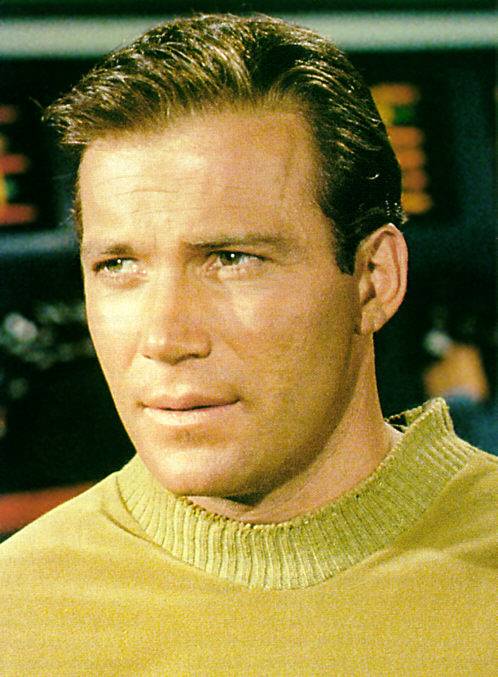
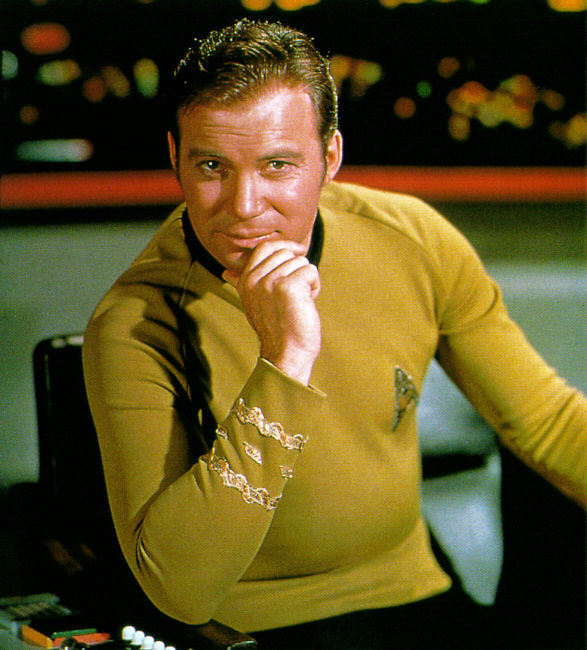
Star Trek Memories by William Shatner

This week I’ve been listening to an old audiobook I’ve had lying around for a long time which for some reason I’d postponed listening to, only to find it’s as interesting and entertaining as I could’ve hoped.

Star Trek Memories

The audiobook is read by The Shatner himself, and that would probably be enough to make it entertaining. But the book is full of interesting details of the lead-up to the production of the original Star Trek series, and varied reminiscences of Shatner and other cast and crew.

Shatner

Did I mention that William Shatner is one of the coolest guys ever to have lived? Even if there had never been a Denny Crane, or a TJ Hooker, or the fantastic/funny/clever album, “Has Been,” he’s still Captain Kirk.

Has Been

I haven’t finished it, but have been having so much fun listening to all the stories of how the cast came together, how Gene Roddenberry dealt with production hurdles and studio annoyances, and how the actors and crew figured out how to portray the characters and design the sets and costumes and makeup.

So far, very highly recommended. It’s short, so I’ll be done soon.

Captain Kirk

I haven’t bought a Kindle yet, and now…

I haven’t purchased a Kindle from Amazon, and given the various problems with DRM-related stumbles in how Amazon treats their own device, it’s not likely I will purchase one.

Kottke article on Kindle fiasco

The basic substance of the article is after a number of individuals purchased the Kindle versions of certain ebooks, Amazon magically deleted all the downloaded files from the Kindles of the customers. This was done due to some kind of rights dispute with the publisher, but it occurred without prior notification to the customers. Amazon refunded the money, but what does this say about the customer’s “ownership” of the product they’ve purchased, if the seller can just snatch it back, whether or not a refund is offered.

For an ebook reader to have any chance to catching on, it needs to not only be open to non-proprietary formats — in other words, you should be able to load your own .txt and .rtf and .pdf documents into it and read them, not just files you’ve purchased from a single provider — but it also needs to have a reasonable level of owner control over the content.

When you put an MP3 on your iPod, whether you ripped it from your own CD, or bought it from Apple’s iTunes store, it’s yours to keep. It never goes anywhere, and Apple doesn’t check in via some back door to make sure you haven’t loaded up, say, a bunch of mp3s you downloaded from bittorrent.

In other words, I’d say Amazon has handled their Kindle more like a Microsoft or a Sony, than like Apple. If Apple does release its own competitor to the Kindle (a larger screen iPod Touch, or iPhone, or the rumored tablet computer), Amazon will be in trouble.