Words In: Zone One by Colson Whitehead

This book came to my attention with Glen Duncan’s review in the New York Times, which opens with the line, “A literary novelist writing a genre novel is like an intellectual dating a porn star.” Duncan himself was a literary novelist who wrote the (wonderful, five stars, loved it) genre novel The Last Werewolf so I figure he’s being a little cute here. Various genre writers and editors and readers were irritated by Duncan’s remark, which didn’t surprise me much. Science fiction, fantasy and horror writers, editors and readers tend to be easily irritated when it comes to comments on the level of respect genre fiction deserves.

My take-away from the review was that Glen Duncan came from the literary mainstream and wrote a fantastic werewolf novel, and the fancy-pants NYT book review hired him to write about another mainstreamish writer who wrote a zombie novel. And lots of genre people are talking all about Zone One, just like they talked all about The Last Werewolf. So maybe Zone One is just as good?
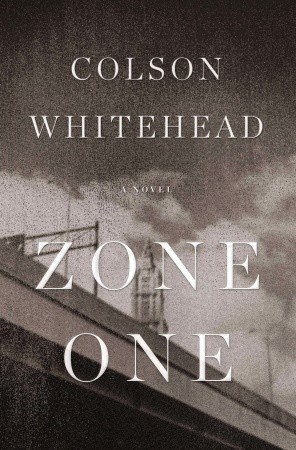
No, not really. Where The Last Werewolf is as entertaining as it is literate, Zone One is more solemn and introspective. In fact, I had to give up my “This is gonna be like Last Werewolf but with zombies, yeah?” preconception before I was able to see what Zone One really is. It’s much less about story and even less about character, and almost entirely concerned with lamenting a lost way of life. At its most cheerful, the book is melancholy nostalgia, and more often it dwells in a sort of numbed, cheerless enervation.

The main character (the amusingly nicknamed Mark Spitz, whose real name is never given) keeps moving, trying to survive. Sort of. I like the narrative voice, but kept hoping for the guy to kick it into gear, to encounter either some truth or some transforming circumstance, or meet some compelling human counterpart to move him. I wanted him to care about what’s ahead of him more, and not just obsess over what he’s left behind him. He seems much more caught up in his thoughts, in a free-associative expository swirl unstuck from time.

The prose here is strong, at times even extremely impressive. I wonder, though, if readers who picked up this book wanting a well-written zombie tale aren’t going to mostly going away disappointed at the slowness and even occasional stagnation of the plot. Colson Whitehead crafts a nice sentence, and comes up with some intellectually compelling images and connections, yet having read this I don’t quite feel driven to explore his other work. In fact if the writing weren’t so technically proficient I’d grade this only three stars rather than four. This one’s not so much about what happens as it is about a character’s look back, and inward.

To the Midwest and Back, With Sickness After

Lena and I visited her family in Indiana for Thanksgiving. Before we left, Lena was sick all week, but I managed to avoid catching it and for the most part she got over it before it was time to fly. Then we arrived to find all her family, from her mother on down to the littlest kids, were terribly sick. I kept trying to take good care of myself (aside from the all-nighter redeye flight to get there) and managed to avoid getting sick, at least until we returned. Now I feel deathly awful, but that’s how it goes. It’s probably too much to ask of my system, even if I’m a pretty healthy person, to fight off illness from so many different angles for such a long time.

So now I’m back to work, catching up with a big backlog of to-do stuff and several overflowing inboxes. For this reason, today’s blog entry will be of the “I’m back but there’s nothing too interesting to say beyond that” variety. Regular weekday morning bloggging should resume tomorrow.

How I Really Feel About Rejection and Persistence

Yesterday’s post was just a bit of fun, mostly inspired by the number of markets I’ve seen close up and the number of editors I’ve seen quit editing at the very moment one of my stories was under consideration or even on the short list. It’s been quite a year.

I’m really grateful to have seen my fiction published for the first time (thanks again, Electric Spec). I’ve signed up for “writing intensives” and workshops. I’ve joined and quit three different online critique groups. I even hired an editor to give me one-on-one critique. I’ve started getting up earlier and earlier every weekday morning to give myself more time to write.

This last thing, making more time to write, doing it more consistently and very nearly every day, has had a greater effect on what I’m doing than any of the rest of it. I think critique groups and workshops can be useful, but I’ve become skeptical of them. They’re most useful at drumming into the beginner’s mind a lot of “thou shalt not” rules, which can be great for the beginner so clueless he or she really has no idea where to start. The closer your writing gets to being publishable, though, the less useful such groups really are. If you want to make that transition from competent fiction-writing technician to confident literary artist, it’s probably more useful to shrug off the “thou shalt not” list. Push yourself to color outside the lines a little.

Yes, getting published is hard. It’s absurdly hard, really. There are few endeavors I’ve encountered in life that require such hard work for such uncertain feedback and such distant rewards. If you set a goal of running a marathon, or becoming a great copier salesman or learning to cook desserts, you’re likely to find easier ways to measure your success and fewer frustrations between commencement of diligent work and the achievement of your goals, than if you set the goal of getting your stories out there into the world. This is a goal more like aspiring to become an astronaut, or an Olympic decathlete, or an actor in motion pictures.

Far, far more applicants than available positions.

But once your heart and mind are fixed, even knowing the difficult odds, you just keep pushing forward. Another rejection doesn’t make you think “Maybe I’m not cut out for this.” You just file it away, and you don’t stop. You do what you have to do.

A List of Places To Which I Submit Fiction

A List of Places To Which I Submit Fiction For Publication (in no particular order)

Cool, Interesting Up-and-Coming Online Periodicals Who Tell Me They Loved My Story and It Was Right In the Mix Until the Final Cut.

Stodgy, Old-But-Still-Popular Magazines That Generally Only Seem To Publish the Work of Winners of Multiple Hugo or Nebula or World Fantasy Awards.

Seemingly Energetic New-ish Webzines Who Suddenly Shut Down While My Story Is Under Consideration.

Periodicals of Diverse Characteristics Where The Editor, Who Had My Story on Their Short List, Abruptly Resigned or Was Fired.

Internet-Based Publications So Utterly Obscure Nobody Would Likely Read My Story Even If They Chose to Publish It.

Electric Spec, Which Gave Me My First Publication: “Remodel With Swan Parts.” (Thanks for that!)

Many Other Places Who Of Course Just Go About Their Publishing Business in Quiet, Routine and Dignified Ways Not Subject to Japery or Ridicule in This Blog Entry.

Note:

I’m not one of those writers who likes to bitch about editors, or to focus to much on how hard it is to get published — I’d rather put my energy into making my stories as kick-ass as possible — but I’m giving myself these few minutes to reflect on the absurdity and seeming futility of this endeavor.

Another Step Down Reorganization Road

A few weeks ago I decided to apply a different organizational plan to my fiction writing work. You can read about it here, but the simple concept is that instead of working on all kinds of different stories at once, switching from project to project according to whatever seemed interesting, I would instead focus on no more than three stories at any given time.

At the end of October I gave a follow-up, though of course not much time had passed yet. So what about now?

It’s taken some adjustment. I think the way my creative mind naturally works is to churn away on lots of different ideas in the background. From time to time, something will bubble up to the surface and I’ll want to grab a hold of it and pursue it, whether it’s a new twist for a story I haven’t even started writing yet, to a potential solution to a sticking point near the end of a story that’s almost finished. There’s no way for me to stop my mind from working that way, but what I can do is strictly allocate my time to only those few stories I’ve selected to focus on. If some other idea comes up, I note it down but don’t pursue it. I save it for later, when I’m ready to work on the story in question.

I might have thought this narrowed focus would result in my being able to rapidly bring stories to a finish and get them submitted, but that hasn’t happened yet. I’ve made good progress on the three stories I mentioned in the last update, but perhaps because of this closer focus on these ideas, I’ve actually realized all three of them needed more work than I’d thought. In other words, those three stories that I’d considered to be within close reach of finality actually are more like a few steps from the finish line.

Maybe it’s proof of my belief in this new approach that I’m actually considering narrowing the focus even more. When I finish one of the three stories I’m working on, I think I’ll refrain for a while from adding a new third story, and further narrow the focus down to only two. Maybe eventually I’ll work the way most professional writers do, and just do a single thing at any given time… really zero in on it with 100% of my energy until it’s finished. A few months ago that would have seemed inconceivable, not because I’m so scatter-brained that I can sit still on a single project, but because I tend to believe a story’s complexity accumulates gradually over time. So if this is true, and I work on only one story at a time, I’ll either rush the story out before it’s had a chance to accumulate adequate complexity, or else I’ll only finish one story every six months or something. I believe, though, that if I can gradually train myself to think differently and apply my creative energies in a more focused way, I can apply the kind of depth I need to that one story in a more reasonable length of time and using fewer revisions.

Words In: Welcome to Hell by Tom Piccirilli

This book (full title Welcome to Hell – A Working Guide for the Beginning Writer) is a quick, easy-to-read overview of (as should be obvious from the subtitle) all kinds of things the new, aspiring writer ought to do. It covers a wide diversity of aspects of the process of moving forward as a writer, from the importance of reading as “food” for the budding writing, to the necessity of self-editing. There’s a section on elements of writing technique such as narrative voice and conflict, and some mention of things peripherally related to writing, such as networking online and rubbing elbows at conventions.

The tone of the book is casual and conversational, but there’s no nonsense, and no shying away from the central truth that for a writer to move even the first step past “beginner” status requires a thick skin, tons of hard work and inexhaustible persistence. Piccirilli himself is a writer of horror and thriller fiction, and most of the points he makes are backed up by examples from genre fiction, but the lessons here are applicable to any writer of fiction, genre or mainstream, short stories or novels.

I know I’m not the only fiction writer who compulsively picks up just about any book about our favorite subject, but I should point out this book really is geared specifically toward beginners. Even a writer slightly advanced beyond that (say, skilled enough to have been published at least once, even if they’re still struggling to get published regularly) may find much of this advice already second nature. For what it’s intended to be, which is a primer for the writer truly just getting started, it’s full of good advice in an easy-to-digest form. In fact, it’s a very quick read, just over 50 printed pages with fairly big type. You could easily re-read the book several times until it all sinks in.

Words In: Saffron and Brimstone by Elizabeth Hand

I first read the lead-off story in this collection, “Cleopatra Brimstone,” in the anthology Poe’s Children (edited by Peter Straub). This story of a young entomologist who moves to London in the aftermath of rape was the best thing in Straub’s anthology and turns out to be the best thing in Saffron and Brimstone too. That’s not at all to say the rest of this collection is lacking.

The very best fictional narrative has the feel of true personal history, enough to inspire the reader to check the writer’s bio and figure out whether or not certain events from the story really happened. That’s how most of these stories felt to me, like places I have seen, and like true life events a storyteller has conveyed to me half-reluctantly and with some sadness. Every story overflows with lush imagery and vivid details. The stories may not be connected by character or events, but a kind of quiet melancholy hangs over them.

It’s always interesting to see a writer shift focus in terms of genre and subject matter. Here, as in her novel Generation Loss, Hand generally tones down the fantastical elements more common in her earlier work. The stories feel exotic, even when nothing impossible or otherworldly is happening. Perhaps her greatest strength is the ability to convey a lifelike sense of place, and of events which might have truly happened. Though in my own reading I tend to enjoy the otherworldly and fantastic, I’m hesitant to say I wish Elizabeth Hand would write more in that direction. Whatever the degree of fantasticality in these stories, Hand’s use of language is so elegant and her characters and situations so engaging, I’ll gladly read whatever she chooses to write regardless of genre considerations. Here, as in Generation Loss, she does something that feels very real.

Highly recommended for those readers who enjoy lush prose and human-focused stories with an otherworldly feel even if they take place in our own world. Readers with a preference for more overt genre elements, as well as those wishing for a greater focus on plot rather than character, may enjoy this less than I did. As for me, this book on top of Generation Loss are enough for me to elevate Elizabeth Hand to among the top handful of authors whose work I’ll explore with most eagerness. From here, it’s on to Waking the Moon or Winterlong.

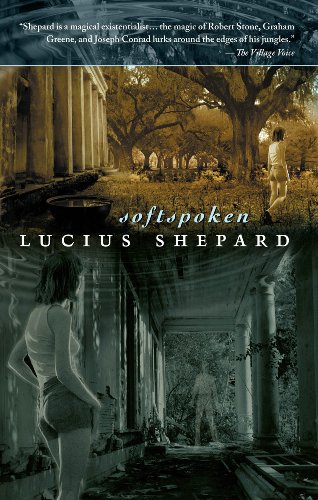
Words In: Softspoken by Lucius Shepard

Sanie Bullard has accompanied her husband Jackson back to his rural home town in South Carolina, where Jackson wants to be left alone to study for the bar. Sanie is on her own more than she’d like, and this forces her to confront just how lacking her marriage is. Jackson’s ancestral home, occupied by his crazy brother and sister, seems to be haunted by some kind of quiet, whispering spirit. Sanie keeps herself occupied by hanging around down at the country store half a mile down the road, and finds herself drawn by the flirtations of a local mechanic. The story feels like it’s less about the haunting and its affect on the Bullard clan over the generations, and more about Sanie feeling stuck in a bad marriage, trying to work up the courage or energy to do something about it.

Shepard writes beautiful, lush and detailed descriptions of the world of the story. He also does a great job getting into the head of the main character as well as drawing convincing portraits of the characters around her. The Southern Gothic quality is well done. I rate this book an extra star just for these things, matters of the writer’s craft.

On the other hand, I found the story too static, lacking even the amount of progression you’d normally find in a short story.

If you’re more interested in expressive writing than plot, and don’t mind a story that ends not too far from where it began, you may really love this. My own judgment is that I found a lot to like about the writing itself but found the story somewhat slight. I’ll gladly investigate Shepard’s other work, but the only recommendation I can give this book is conditional. Some readers will enjoy the stillness, others will be irritated at the “stuck” characters and situations.

Google Minus

For a while I really thought Google Plus AKA Google+ was going to rise up and become the next big social network after Myspace and then Facebook. Half the people I know signed up for G+ during a short period of time, and there were even a few who said “Screw Facebook, I’m outta there — it’s just G+ for me from now on.” Facebook was certainly showing signs of losing their shit.

And for a while I crossposted all my Twitter and Facebook stuff to Google+ and it looked like the whole world might gradually shift on over, just like many people did from Myspace to Facebook half a decade ago.

Somehow Facebook managed to pull back from the brink, stem the tide of pissed off people shutting down accounts, and G+ saw a sudden and gigantic surge of spammy-looking traffic. When I first went to G+ I had only a small number of people in my circles and not many more than that add me to their circles, but soon I was had twenty or thirty people adding me per day, almost none of whom I actually knew in real life. It works OK to have a mix of people you know in the real world along with some virtual friends and a few people you don’t actually know or even understand why they’ve added you. But at some point if the number of people to whom you have no connection start adding you, it starts to feel like a big spamfest. It feels like Myspace all over again, people mass-adding friends as quickly as they can to promote their business or their band or their self-published novel.

Now I haven’t been to Google Plus in a week or two. I check the email notifications and see if any of the people who have added me are people I know in real life, or at least “friends of friends” that I could justify adding to a circle. Most of them are just complete strangers who seem to lack any reason to have added me to their circles. 

I always figured social networks had an inevitable curve, where they grow until they become too big to remain manageable. At that point the incentive for spamming, self-promotion and deceit become too great, and they become a mess of ads, spam and junk . Is it possible Google Plus will be the first social network to reach that point without ever having actually succeeded first? That it might go straight from growing new network, to totally washed-up commercial wasteland?

All-Time Album: Sleeps With Fishes

An internet forum I belong to asked people to name the one music recording they couldn’t do without, and I was surprised at my own response. I’ve loved this album since it came out, but over the years it’s become an indispensable “die without it” favorite.

Sleeps With Fishes by Pieter Nooten and Michael Brook

Here’s Michael Brook’s web site listing for the album.

And a blog (not mine) which expresses similar thoughts to my own about the album.