Burnt Black Suns by Simon Strantzas

After I read Nightingale Songs, the prior collection of restrained and disquieting stories by Simon Strantzas, I found myself wondering what kind of work this author might creat with a more direct, less elliptical approach. His follow-up, Burnt Black Suns, answers that question.

burntblacksuns

Whether this change in direction arose from a natural drift in the author’s motivation, or a desire to prove he can successfully master new and different tricks, the stories here seem clearly designed to take a more straightforward approach than Strantzas has used previously. In particular, pieces like the opener “On Ice” and the titular closing novella hit so much harder as to seem almost the work of a different writer.

Not one story in the book is anything less than excellent, and the novella “Burnt Black Suns” is my single favorite thing Strantzas has written. This collection is a work of real excellence, which deserves to be read by everyone interested in intelligently crafted horror fiction. Burnt Black Suns is highly recommended.

Review of The Children of Old Leech by Benito Corral

Here’s another new review of The Children of Old Leech, and it’s another rave. It’s by Benito Corral, here:

http://betwixtbookreviews.blogspot.com/2014/07/reviewthe-children-of-old-leech-edited.html

I’m pleased to see another positive mention of my story “Firedancing.” This book really seems to be getting universal praise so far, and that’s something I love to see.

World Horror Convention 2014 – Rock & Roll and Horror Panel

I never got around to documenting much of the 2014 World Horror Convention, which took place here in Portland, and was the first time Lena and I had attended WHC.

One noteworthy event in which I participated was the “Rock & Roll and Horror” panel, moderated by Anya Martin and also including John Skipp, John Shirley and Scott Nicolay.

rr-horror-panel1

In this first photo, we’re still waiting for the panel to begin. Scott Nicolay has not yet shown up. While the audience settled in, we played music from Anya’s surf-horror compilation CD on a little boombox to set the mood.

rr-horror-panel4

Here we’ve gotten underway. From left to right, that’s John Skipp, John Shirley, Anya Martin, Scott Nicolay and me.

rr-horror-panel3

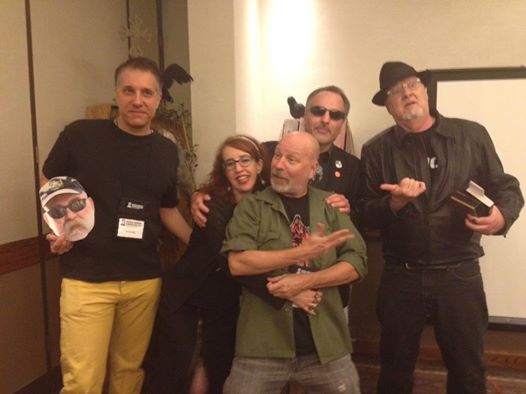
Here we are after the panel, getting ready to pose in front of some cool World Horror Con room decor. We brought the head of Joe Pulver, because he belongs!

rr-horror-panel2

And this one captures the fun atmosphere of the event. John Skipp is pure rock and roll. We all had a blast!

Many subjects were discussed, including the earliest examples of rock and roll music appearing as a subject in horror stories or films, and ways in which we as writers use music as a story element, or as background while we write.

Here are a few short videos my wife Lena took during the panel. She didn’t want to record anybody else this way, because she didn’t have permission, so the videos are mostly limited to the three times I spoke at length.

In the first video we’re introducing ourselves, explaining our own background with music and horror. You can see the end of Scott’s introduction, then my introduction, then Anya getting the panel started.

In the second, we’re talking about our first recollections of where we first encountered rock and roll connected with horror books or films. Scott is talking about a crazy rock and roll book, and I mention a couple things that came to mind: Stephen King and Rocky Horror Picture Show.

The third video is nearer the end, where we’re talking about how we use music as writers, what we listen to, and what music contributes to what and how we write.

We spent a fair amount of time talking about Pink Floyd and the Velvet Underground and other mutual favorites. I was content to speak less than the others, as this was my first panel appearance of any kind.

The last time I spoke at greatest length, there’s no video, but we had moved on to talking about similarities and differences between making music and writing. I tried to explain how much alike my approaches are between the two — how most often I start with a very simple, almost uninteresting overall pattern, and try to add new layers and complications to it until it becomes interesting. Often then as it becomes more complex and many layers have been added, some of the earliest layers added might be removed. Very often by the time I’m finished, not only is the flavor different from what it was when I started, but even the general shape has completely changed.

I wish there was video of what I said, because some of these thoughts were things I hadn’t really realized until I was asked the question, and tried to answer it on the fly in front of an audience.

Overall, the panel experience was a lot of fun, and I’m fortunate to have been a part of this fun and interesting discussion at 2014 World Horror along with other great people like John Skipp, John Shirley, Anya Martin and Scott Nicolay.

The Children of Old Leech Hardcover is Here

I tore through the electronic Advance Reading Copy as soon as I received it, and found The Children of Old Leech to be an absolutely top-notch anthology of weird fiction. Though I continue trying to adjust to electronic books, nothing will ever approach the experience of holding a quality print hardcover.

I present the first pictures of The Children of Old Leech, edited by Ross E. Lockhart and Justin Steele, and including my story “Firedancing.”

cool-cover2

cool-cover1

cool-spine

cool-toc

cool-firedancing

I’m very pleased, excited and proud to be in this book. Can’t wait to see how it’s received!

Outlining Backward

I distrust most writing advice I see online, but yesterday’s article by Charlie Jane Anders on io9.com includes some advice I agree with.

This article, “One Weird Trick For Cutting Down Your Novel,” is mostly about using outlining to see where your story is structurally weak, and where you might cut content or remove entire scenes, if they’re redundant.

Many writers don’t believe in outlining in advance. They feel doing so robs the actual writing process of the “magic of creation,” which they consider the fun part. These writers argue that once the outline’s written, they already know what’s going to happen, so they have a hard time getting motivated to actually write the story out.

I believe in outlining. I think it’s important that a story have a basic structure, and that every scene contribute something. Writers who go by the seat of their pants often end up including scenes that are digressive or redundant, just because they’re having fun following their muse through the story.

If you can’t outline in advance, I get it. What you might do instead, though, is what I call the reverse outline.

If a standard outline is an advance plan for a story, a reverse outline works in reverse. It looks at a story that has already been fully written, and outlines the structure, and the function of each scene. Reverse outlining often reveals that a given scene ended up not really serving any purpose, or did something that is repeated elsewhere.

It might also reveal that the story’s shape is broken. A story might have intersperse scenes that move the story forward with scenes that stop and think, or establish atmosphere or character, or look backward. An outline might reveal you’ve created a big lull in the middle of your story, maybe several scenes in a row where nothing much happens.

It’s a way of seeing your entire story at a glance. Zoom out, like a painter standing back across the room to take in the whole picture at once. This is especially useful if your story is too long, and you’re looking for places to cut, but even if it’s not about cutting, the reverse outline can help you find weak spots that need shoring-up.

Catching up on Recent Reading

Recently I resolved that I’d stop doing formal (or at least, semi-formal) reviews of the books I’ve read, but I didn’t intend to completely stop talking about what I’ve been reading.

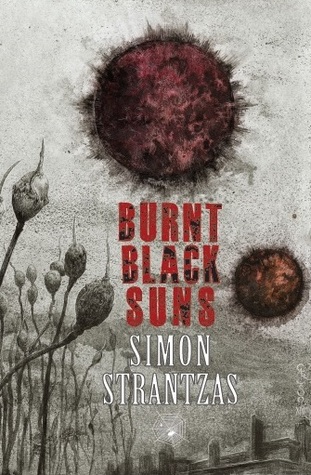
Right now I’m in the middle of Burnt Black Suns by Simon Strantzas. I’ve read enough to know it’s something I’d definitely recommend. The second half of the book will determine how high I might rank this, but at a minimum it’s very good stuff, and worth a look. Simon’s one of the great writers on today’s horror scene, and seems to be aiming with this book for a more aggressive, visceral edge, as opposed to his usual quiet, atmospheric approach.
burntblacksuns

I recently finished Ana Kai Tangata, the debut collection by Scott Nicolay. In my review on Goodreads.com I said, “Certainly it’s one of the best debut collections I’ve ever read, and promises great things to come. Anyone interested in horror or weird fiction, or just dark and disturbing stories of troubled and broken people, will want to check this out.” Scott is a friend, but that’s not why I believe he’s written an incredible book here.

anakaitangata

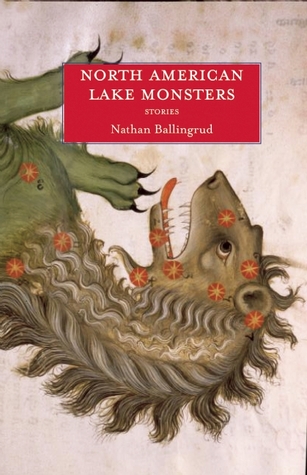
You absolutely should not miss North American Lake Monsters… though this one’s getting such great word of mouth, you probably already know that. It came out last year, so I’m getting to it a bit late. This has been a hell of a time for collections of dark, weird fiction. I love the way Ballingrud shifts from a dirty realism reminiscent of Raymond Carver to the toughest and darkest black horror. Ballingrud’s work is powerful, confident and inspiring. Truly impressive.
northamericanlakemonsters

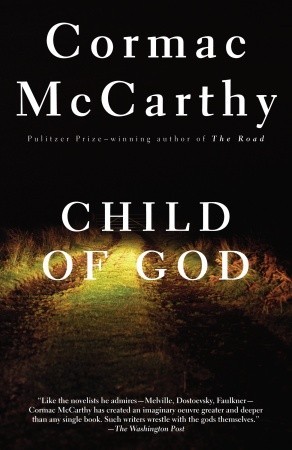
This week, I finished Child of God by Cormac McCarthy, and absolutely loved it, if “loved” is the word you’d use for something so dark and awful it makes you shudder while you’re reading. It’s earlier, simpler McCarthy, only a couple of hundred pages long, and more stripped down than anything of his I’ve read. For those who argue McCarthy is a horror writer, this is Exhibit A.

childofgod

Prior to that, I read McCarthy’s Blood Meridian for the first time. Somehow, I’d managed to postpone reading the greatest work by one of my favorite authors. I had some sense of “saving it” for a later time, and finally decided 2014 was the year. It’s difficult to come up with language sufficient to convey what this book is like, how hard it hits. It may be the most powerful book I’ve ever read, and certainly one of the most inspiring. I’ve always believed the weird and horrific can convey profound truths about the universe, and the place of human beings within it. This book spun my head around with its wild philosophical ideas, its brutality, and overwhelming, incantatory language.

bloodmeridian

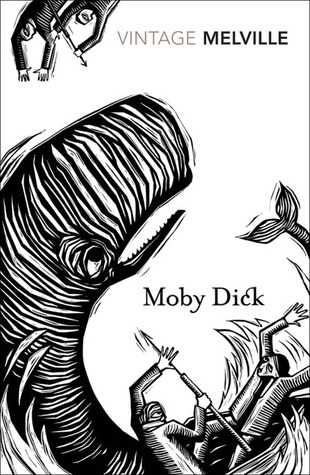
I’ve just begun Moby-Dick, another one of those “how could any English major graduate without having read it?” books I’m encountering later in life. What I’ve read so far is beautiful and strange, and I plan to savor it slowly, over several months. I purchased the California Edition, recommended to me by Michael Cisco as his preferred edition of his favorite book. It’s a vastly less expensive, reduced version of the Arion Press letterpress edition, copies of which sell for tens of thousands of dollars. You get all the beautiful letterpress layout (reproduced in offset printing) and woodcut illustrations by Barry Moser, for 1/500th the price.
mobydick

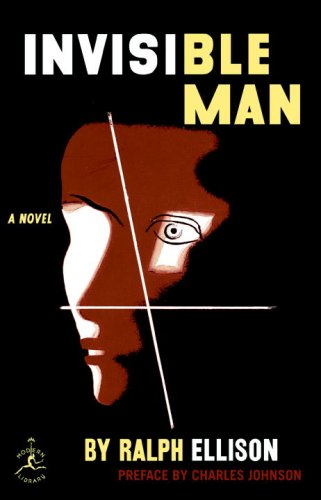
And keeping with the theme of books I should’ve read long ago, on Scott Nicolay’s recommendation I read Invisible Man by Ralph Ellison. It’s yet another of those all-time greats of American literature, one which many proclaim the Great American Novel. I’ll admit I probably avoided it in college because someone described it to me as a “protest novel,” but it’s not that at all. It’s weirdly experimental, propelled by an at times almost manic, jazzy energy, and displays fierce intelligence and philosophical curiosity. Truly a shame Ellison didn’t publish more than this in his lifetime.
invisibleman

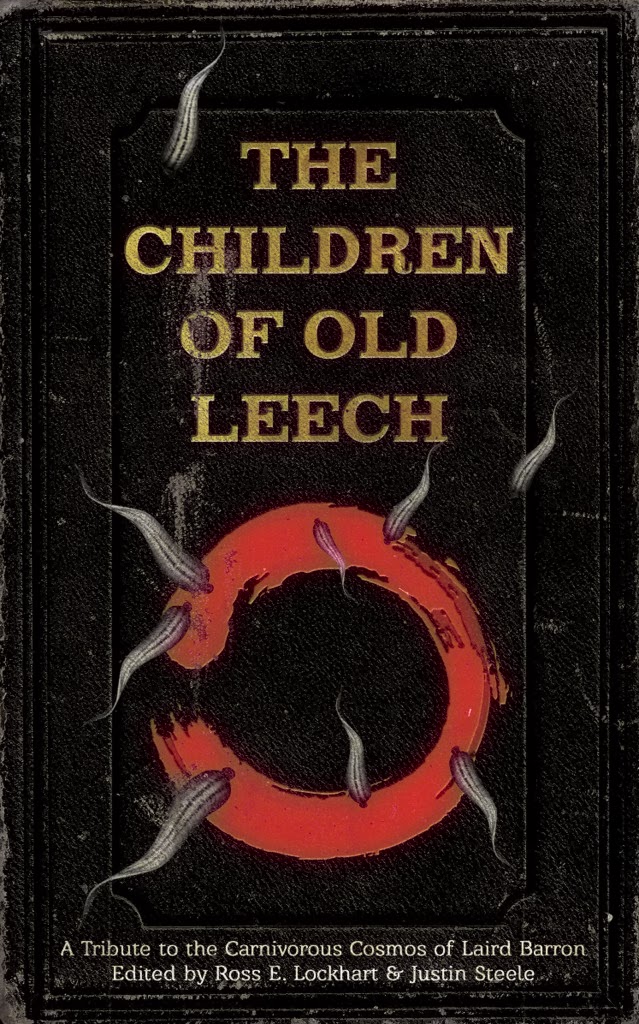
Lastly, I’ll mention a new book I finished reading a couple weeks back. This one’s different than those above. I’m a bit biased, as my story “Firedancing” is included. It’s The Children of Old Leech, an anthology in tribute to Laird Barron, edited by Ross E. Lockhart and Justin Steele. I mention this not just because I’d like to see the book do well, but because it truly seems to me like a top-notch weird fiction anthology. The quality of the writing is uniformly excellent. Every writer seems to “get” Laird Barron, what’s unique about his work, and many take unusual approaches in their tribute. The book is a delight from beginning to end. But remember, I’m biased!
ChildrenOfOldLeech

That constitutes a truly amazing stretch of fiction over the past several months. I’ve become a bit more quick and ruthless about setting aside any book that’s not really top-notch, which has left me more time for rewarding reads like these.
The Children of Old Leech Ready to Order

The Children of Old Leech is supposed to be released July 15, but has begun showing up as “in stock” in various online bookstores.

BOOK DEPOSITORY:
http://www.bookdepository.com/Children-Old-Leech/9781939905024

BARNES AND NOBLE:
http://www.barnesandnoble.com/w/the-children-of-old-leech-ross-e-lockhart/1119727147

POWELLS BOOKS:
http://www.powells.com/biblio/61-9781939905024-0

AMAZON:

All four of the above indicate in one way or another that they have copies of the book to sell, though the only one that says “ships within 24 hours” is Barnes and Noble.

I know a lot of people are looking forward to getting their hands on this book, and with good reason. I just finished reading it myself, and it’s absolutely packed with excellent and varied stories by many of today’s best weird & horror fiction writers. My own story “Firedancing” appears in the book. I feel absolutely thrilled and proud to be included in such company, and also to be able to pay tribute to Laird Barron, for whom I have the greatest respect.

ChildrenOfOldLeech

Editors Justin Steele and Ross E. Lockhart have put together a really noteworthy book, one that I feel is certain to get a lot of attention in coming years.

Surreal Worlds Table of Contents

Here’s the tentative table of contents for that anthology I recently mentioned, Surreal Worlds, edited by Vincenzo Bilof.

Steve Rasnic Tem “Paula Breaks”

John Palisano “The BiPolar Express”

Gabino Iglesias “aaaaaaaaaaaaaaaaaaaaaaa”

Robin Wyatt Dunn “A Shadow of a Princess’s Dream”

Bruce Boston “Surreal Chess”

Rhys Hughes “Bones of Jones”

R.A. Harris “The Noise that Stains”

Seb Doubinsky “Goodbye Babylon”

Thomas Logan “The Continued Instances of George Marthis within the Singularity, wherein the Instance Knows No Rules (George is Old When Our Story Starts)”

Daniel Vlasaty “Everything is Colors All of Them”

Michael Griffin “Jewels and False Memories: The Origins of a Lunatic”

Max Booth III “One Day I’ll Quit this Job and Rule the World”

Dustin Reade “House Party”

Adrian Ludens “I Can Do What I Need to in the Dark”

Andrew Wayne Adams “Light Amplification Stimulated Emission of Radiation”

Wolv-riey “The End of the World Pie”

Allen Griffin “I, Autocorrect”

Tom Bradley “Mr. Fuck You Okay?”

Chantal Noordeloos “Labels”

Don Webb “The Last God”

Bob Ritchie “The Mahler Stream”

Eli Wilde “Snowflakes Falling, Pages Turning”

Antonio Magogoli “The Inmost Plague Bell Swims”

Chris Kelso “The Statement of Tom Tryout”

Carter Rydr “Pain Pig’s Pilgrimage”

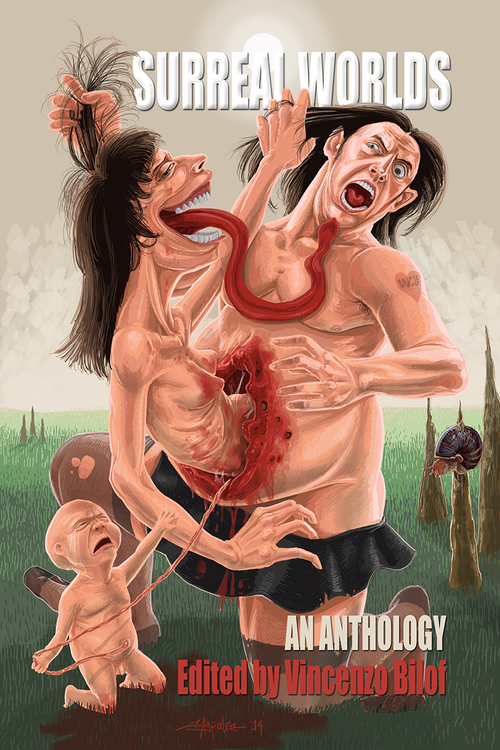
Here’s that cover again:
SurrealWorlds

Surreal Worlds Anthology

I’ve just received news that I’ll have a story in an upcoming anthology called Surreal Worlds, which will be published by Bizarro Pulp Press. I don’t yet know any of the other contributor names or story titles yet. The Editor is Vincenzo Bilof.

My story “Jewels and False Memories: The Origins of a Lunatic” is a speculation on the early life events that might have inspired the obsessions that marked Salvador Dali’s art.

SurrealWorlds

The release is scheduled for Fall, 2014. Should be fun!

Children of Old Leech – It’s Gonna Be a Book!

There’s a progression of a book moving on from beginnings to become more and more real. First it’s just a concept, then it becomes a real plan, with a name and release date.

Cover art makes it seem more real, and if it’s an anthology, seeing a roster of the writers involved, and especially the titles of their stories, brings it that much closer to tangibility.

Short of actually holding the book in your hand, the two things that make it seem like it’s actually, truly going to be a real book are, 1) reading an electronic proof of the complete, edited text, and 2) seeing photos of the actual book in proof form.

I’ve had the ebook version of The Children of Old Leech for a few days now, and I’m about halfway through the book. So far, every story I’ve read is somewhere between very good and fantastic. I love the wide variety of styles and approaches taken by the different writers.

And as for seeing a copy of the actual book, we’re not quite to the final stage in the “it’s a real book” progression, but yesterday co-editor Ross E. Lockhart posted this:

oldleech-large

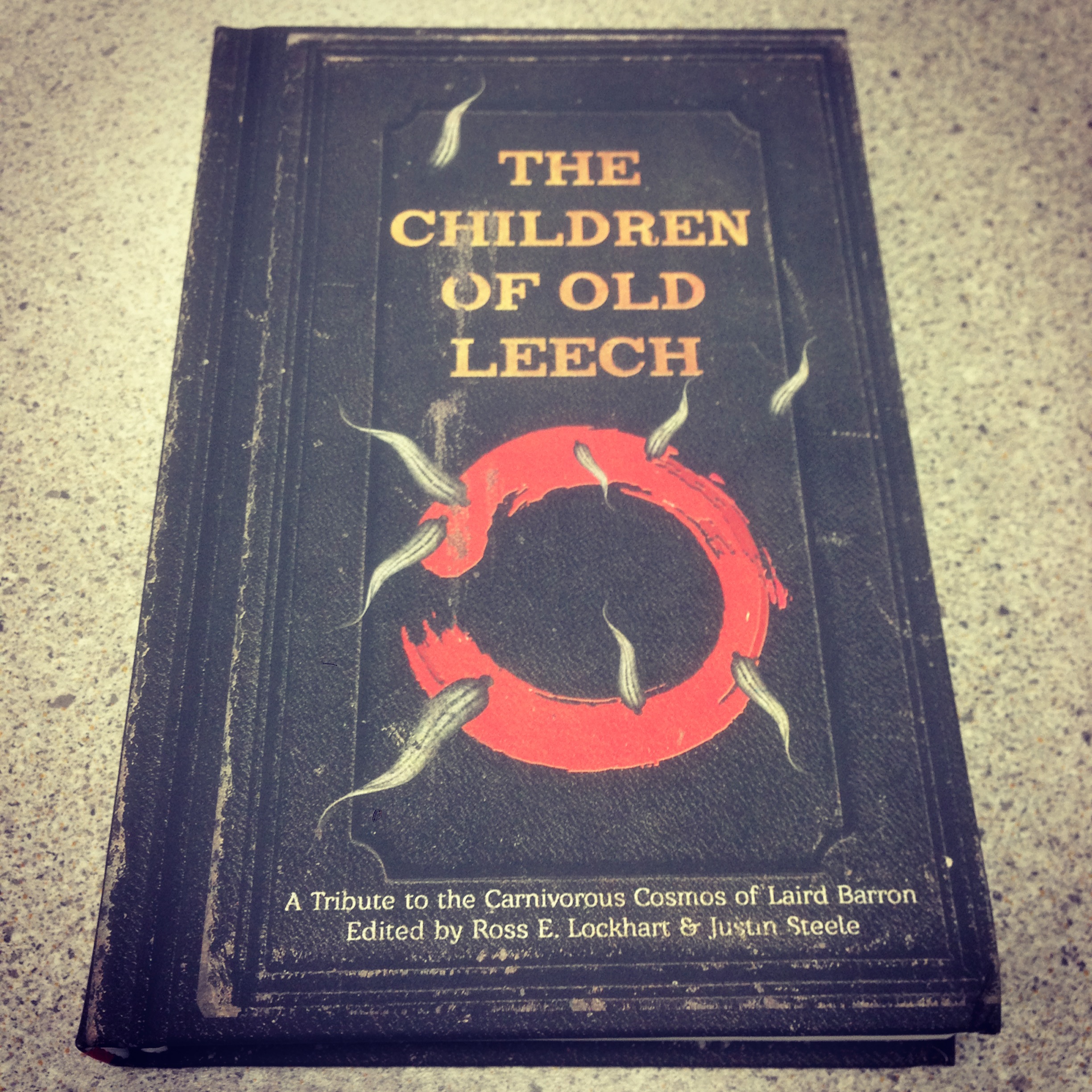
I love the cover design by Matthew Revert. The concept was clear from looking at digital art, but the intended sense of a real, old tome of worn leather really comes across when you see it like this.

Those of you who haven’t seen me talk about this before: this is The Children of Old Leech, a Laird Barron tribute anthology. You can read more or pre-order if interested.