Cover Reveal for Cthulhu Fhtagn!

Word Horde has just revealed the cover for the upcoming anthology CTHULHU FHTAGN! which includes my story “Delirium Sings at the Maelstrom Window.” It’s beautiful!

cthulhufhtagn

The announcement on Word Horde’s own site is HERE, and includes a pre-order link! My past experience with direct pre-ordering Word Horde books is that you’ll most often receive the ebook part of the package in advance of the release date. No promises, of course, but it’s probably the fastest way to get your hands on this book, which is scheduled to be released in August.

I’m excited to share a table of contents (below) with some fantastic authors, including many for the first time.

Table of Contents

Introduction: In His House at R’lyeh… – Ross E. Lockhart
The Lightning Splitter – Walter Greatshell
Dead Canyons – Ann K. Schwader
Delirium Sings at the Maelstrom Window – Michael Griffin
Into Ye Smoke-Wreath’d World of Dream – W. H. Pugmire
The Lurker In the Shadows – Nathan Carson
The Insectivore – Orrin Grey
The Body Shop – Richard Lee Byers
On a Kansas Plain – Michael J. Martinez
The Prince of Lyghes – Anya Martin
The Curious Death of Sir Arthur Turnbridge – G. D. Falksen
Aerkheim’s Horror – Christine Morgan
Return of the Prodigy – T.E. Grau
The Curse of the Old Ones – Molly Tanzer and Jesse Bullington
Love Will Save You – Cameron Pierce
Assemblage Point – Scott R. Jones
The Return of Sarnath – Gord Sellar
The Long Dark – Wendy N. Wagner
Green Revolution – Cody Goodfellow
Don’t Make Me Assume My Ultimate Form – Laird Barron

My thanks to Editor and Publisher Ross E. Lockhart for putting this together, and giving me an opportunity to be part of it.

2015 CthulhuCon Schedule

The schedule for next week’s CthulhuCon has just been posted HERE. The event is April 24-26, with most of the activity on the last 2 days.

I’ll have a reading on Saturday (1:30-2:30 PM) along with Wilum Pugmire and David Barker.

Also on Sunday (1-2PM) I’ll be moderating a panel on “Mythos and Music,” along with some great panelists.

More on both these events as we draw nearer. I’m looking forward to my first convention since last summer.

A Triple-Good Day For a Writer

A few things happen today, each of which counts as a quantum of “writer success.”

A new interview with Laird Barron by the guys at Miskatonic Musings was posted today,
HERE. I listened through about the 30 minute mark, but then had to depart for the day job, where I can’t listen to podcasts with naughty words and discussions of naughty bits freezing up. My wife informs me that Laird mentions me near the end, so that makes me pretty happy, since Laird is a towering, city-stomping monster of a weird fiction writer, and a very wise fella when it comes to recommending new talent.

Item number two, in other Laird Barron related news, is Laird’s latest blog post, New Blood, in which he lists a number of emerging writers who are constitute a sort of new generation “helping reshape the contours of modern horror.” My name is on the list, so I’m double-happy.

Third thing, I just received an acceptance email and contract and payment, all within a few minutes of each other, for a story to appear in A Mythos Grimmly. The anthology is a sort of crossover between Lovecraftiana and traditional fables. My story, “The Apprentice, the Muse and the Mancer,” is a bit of a departure. Also, though I don’t do this writing thing for the money, I did receive the largest-ever single paycheck for a story. Here’s to bigger and bigger checks, and more publications!

Uses and Abuses of Social Networking

A lot of people are talking about the downfall of Facebook and the need for newer, better social networks. This talk, roughly coincident with the rise of a new social net called ello, has me thinking a lot about how these social networks operate, what we can hope to derive from them, and why so often things go wrong.

Everyone seems to assume that because social networks start out small, and there’s not a lot of money to be made, the founders tend to be idealistic and focused on human-scale goals, such as creating a solid user experience and giving people a compelling virtual environment in which to reconnect with old friends and meet new ones.

Then the story goes, with the growth of a user base and monetization of the attention of millions (eventually tens or hundreds of millions) of members, focus shifts from optimizing user experience to maximizing revenue growth. I agree this is true. Part of what went wrong with MySpace and what’s going wrong with Facebook has to do with what I perceive to be management seeing their user base increasingly as a very large data set, rather than human beings.

The more I think about this and look at how things work on Facebook and Twitter and others, though, the more I become convinced that the biggest problem, the greatest factor which causes the deterioration of the user experience on a social network, is us.

You might imagine that we would primarily “follow” or “friend” a person on a social network because we want to interact with that person, be entertained by them, or get to know them. Increasingly, though, people send out friend/follow requests on a wholesale, indiscriminate basis, not looking for what interaction might be had, but instead seeking what they can gain by receiving that person’s attention in return.

On Twitter, the “follow-back” seems to be almost a given for most people. They follow you, not because they want to see what you post in their Twitter feed, but because they expect you will follow them back, and they can then impose their promotional efforts upon you in spam-like fashion.

At the very least, even if they don’t think you’ll see or notice their posts, you’re increasing their “followers” number, which actually seems to be important to many people. I’ve seen self-published writers, or “indie” bands, whose work clearly is not widely-known or “bestselling,” yet they have a number of followers in the tens or hundreds of thousands. There is simply no way to achieve that number of followers, if you’re not a famous person, except by gaming the system. These people either “buy” sham followers from services who sell them, or they mass-follow huge numbers of people with the expectation of receiving an automatic “follow-back.”

On Facebook, the problem is different, because the “one-way” connection is almost unknown. If you send me a friend request and I accept it, then we are BOTH friends. So if someone reaches out to you and sends you what seems like a friendly gesture, seems to say “I want to know you,” the friendly thing would seem to be acceptance. Then you’re friends. The problem is, most people are not sending you friend requests because they want to get to know you. In many cases they’re doing it because they want to promote themselves and want a large audience to receive their message.

The problem of accumulating numbers of followers as on Twitter is less of an issue on Facebook, because personal accounts can’t have more than 5,000 friends. What happens a lot, though, is total strangers sending out lots of friend requests, then as soon as the request is accepted, firing off a request to “like” their page. Again, the transaction feels very much like spam or junk mail, nothing like what a true social interaction is supposed to feel like.

The newest thing is ello, a new, comparatively small and minimal social network. I was an early member there, and during the first week, it felt like such a breath of fresh air. I only had a few “friends” there, but everything that I saw posted in my friends feed was interesting, relevant, funny, or something. Generally, it felt like socializing. We goofed around with ello, posted things, talked about the interface and features. It was so refreshing, I felt tempted to believe that the problem was the system itself, and not the users.

But with the initial success of ello, much publicity has followed. Suddenly there’s an influx of spam type accounts, mass-following everyone in sight. If someone has an account just 8 hours old and is already following 3,000+ people, that’s a fairly good clue that the person didn’t create an account to socialize. They’re finding random lists of people and clicking “friend, friend, friend, friend” all the way down the list, for hours on end.

These people are operating completely in bad faith, hoping the tricks that allowed them to game the system with Twitter and Facebook will apply with ello. In fact, it could be worse, as there’s no 5,000 friend limit. It’s my intention not to follow anybody who can’t approach ello like a true social network, trying to get to know people and communicate with them one on one, rather than just harvesting a huge mailing list to spam their self-promotional bullshit.

This lesson learned through ello is something I’m taking back to Twitter and Facebook. I’ve been going through Twitter and unfollowing several dozen people every day. On Facebook, I’m doing some unfriending, some un-liking, and some un-following. It’s partly my own fault that the experience on these networks has become so unpleasant. My news feed is full of garbage and spam because I have allowed people like that to hook me into their “I’ll follow you, so you follow me” game. That’s a recipe that ends up ruining the whole thing for everyone. From now on, I opt out.

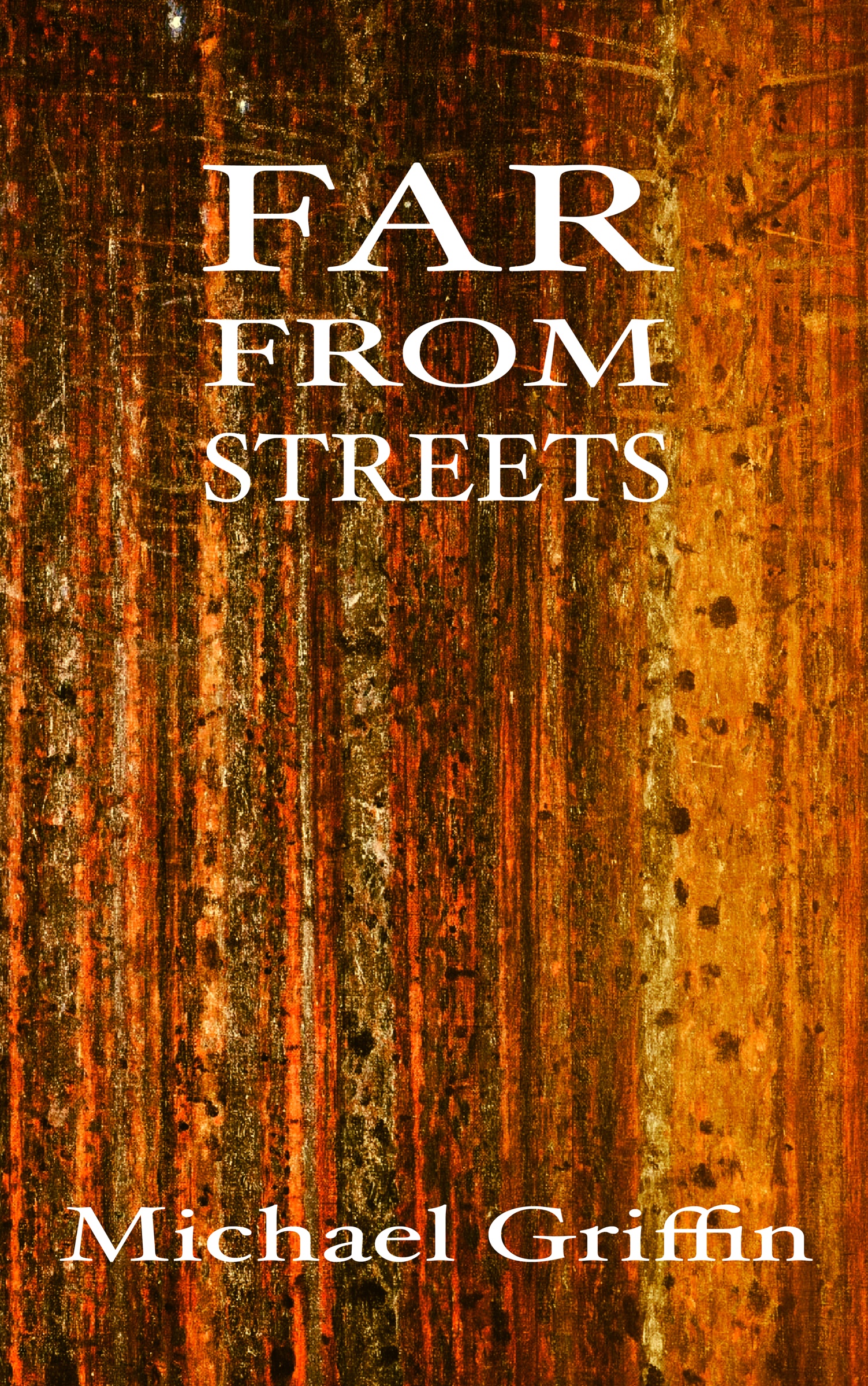
Another Reaction to Far From Streets

Recently I mentioned a few initial reactions to Far From Streets, my novella published this summer by Dunhams Manor Press.

I don’t intend to make another new blog post every single time someone says anything about it, but comments recently made by Christopher Slatsky on Facebook [HERE] delighted me sufficiently that I want to mention them. Follow the link if you want to read what he said, which ends with: “Fantastic accomplishment here. Very highly recommended.”

Thanks, Christopher!

Review of The Children of Old Leech by Benito Corral

Here’s another new review of The Children of Old Leech, and it’s another rave. It’s by Benito Corral, here:

http://betwixtbookreviews.blogspot.com/2014/07/reviewthe-children-of-old-leech-edited.html

I’m pleased to see another positive mention of my story “Firedancing.” This book really seems to be getting universal praise so far, and that’s something I love to see.

Outlining Backward

I distrust most writing advice I see online, but yesterday’s article by Charlie Jane Anders on io9.com includes some advice I agree with.

This article, “One Weird Trick For Cutting Down Your Novel,” is mostly about using outlining to see where your story is structurally weak, and where you might cut content or remove entire scenes, if they’re redundant.

Many writers don’t believe in outlining in advance. They feel doing so robs the actual writing process of the “magic of creation,” which they consider the fun part. These writers argue that once the outline’s written, they already know what’s going to happen, so they have a hard time getting motivated to actually write the story out.

I believe in outlining. I think it’s important that a story have a basic structure, and that every scene contribute something. Writers who go by the seat of their pants often end up including scenes that are digressive or redundant, just because they’re having fun following their muse through the story.

If you can’t outline in advance, I get it. What you might do instead, though, is what I call the reverse outline.

If a standard outline is an advance plan for a story, a reverse outline works in reverse. It looks at a story that has already been fully written, and outlines the structure, and the function of each scene. Reverse outlining often reveals that a given scene ended up not really serving any purpose, or did something that is repeated elsewhere.

It might also reveal that the story’s shape is broken. A story might have intersperse scenes that move the story forward with scenes that stop and think, or establish atmosphere or character, or look backward. An outline might reveal you’ve created a big lull in the middle of your story, maybe several scenes in a row where nothing much happens.

It’s a way of seeing your entire story at a glance. Zoom out, like a painter standing back across the room to take in the whole picture at once. This is especially useful if your story is too long, and you’re looking for places to cut, but even if it’s not about cutting, the reverse outline can help you find weak spots that need shoring-up.

H.P. Lovecraft Film Fest & CthulhuCon Stretch Goal

If you’ve followed this blog much at all in the past, you’ve seen me mention the wonderful H.P. Lovecraft Film Fest & CthulhuCon we have here every year. In 2014 it’s in April, and I’ll be appearing once again as a guest.

Last year we hosted Mike Davis of Lovecraft eZine and the mad writer and editor Joe Pulver. Mike Davis is already confirmed for this year’s event, though it’s a bit more expensive to arrange for Pulver to fly over from Berlin.

This morning I was very excited to see Gwen and Brian Callahan, the organizers of HPLFF&CC, have set the next “stretch goal” level on the event’s Kickstarter. If they make it to $18,500 they will bring Joe to the event from Germany. We’ve already offered to host Joe at our place if he can get here, so all we need to make this a reality is to boost that Kickstarter to the next level.

Here’s the link: Kickstarter Update #5

The Book of Apex, Volume 4

Apex Magazine (where my story “The Lure of Devouring Light” appeared in issue 47, April 2013) occasionally prints a book collecting reprints of all the magazine’s stories in. Each is called “The Book of Apex,” with a number.

The fourth installment is coming soon, and they just previewed the cover. I think it looks great.

Pageflex Persona [document: PRS0000040_00012]

I should point out, my story is NOT appearing in this book, but will actually be in The Book of Apex #5 presumably some time in 2014. I’m just sharing this because I love the cover, and it reminded me of this upcoming reprint of one of my favorites among my own stories.

I think everyone should support Apex Magazine, either by subscribing or by purchasing these books. It’s one of the most interesting short fiction magazines out there, working across horror, fantasy and even sometimes science fiction boundaries.